by: Marianna Monheim Updated 4/7/2026
If you need simple, meaningful end-of-year activities for upper elementary students, an end-of-year choice board is one of the easiest ways to keep learning going without planning a brand-new lesson every day. It gives students structure, offers choice, and helps you manage those last hectic days of school with a lot less stress!
The TL;DR for Busy Teachers
- A choice board gives students engaging end of year activities without a lot of prep.
- It works well for grades 3–5 and can be adapted for different learners.
- You can use it for independent work, centers, early finishers, or the final week of school.
- This resource gives students meaningful options while you finish all the end-of-year tasks on your plate.
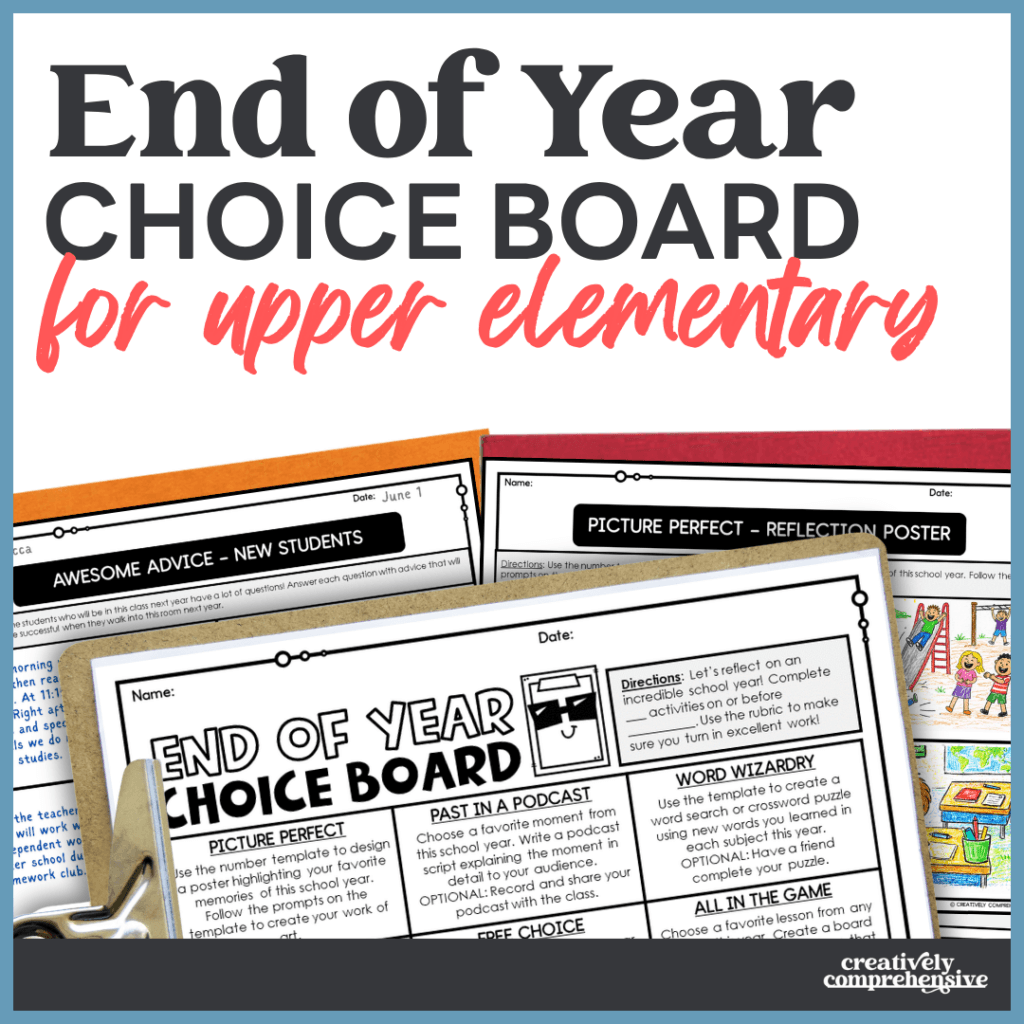
Table of Contents
The end of the school year has a very…specific kind of energy.
You’re wrapping up grades, cleaning out desks, sorting supplies, juggling special events, and trying to keep students focused when they know summer is right around the corner. It’s fun. It’s exciting. It’s also more than a little chaotic.
That is exactly why I think an end of the year choice board is the perfect activity for this time of year.
Instead of scrambling to come up with one more activity for one more day, you can hand students a set of thoughtful, engaging options that still feel purposeful. They’re busy with structured, independent activities, which means you get a moment to catch your breath (and tackle some items on the EOY to-do list).
What is an End of Year Choice Board?
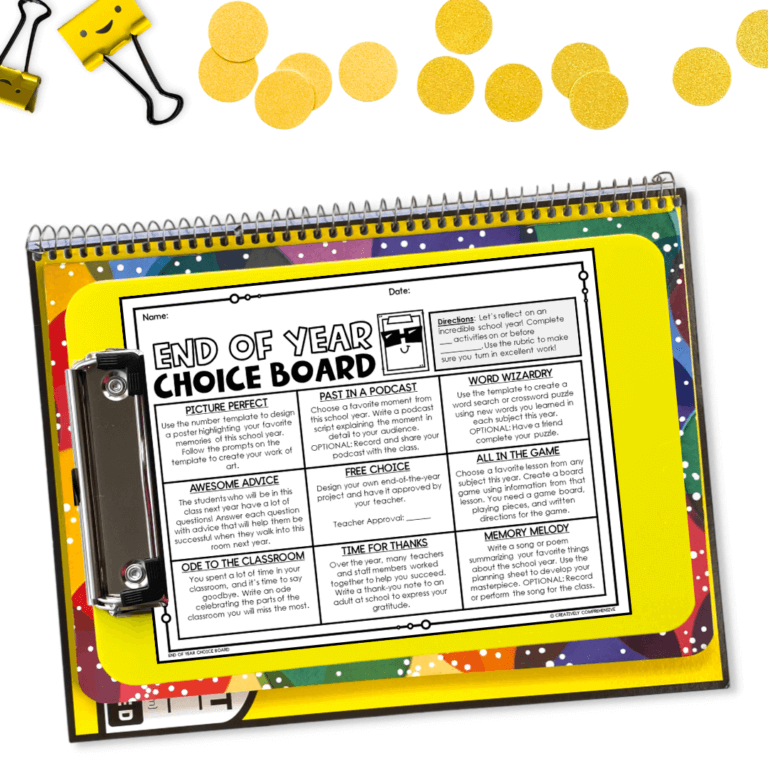
An end-of-year choice board is a student-friendly board filled with activity options students can complete during the final days or weeks of school. Instead of everyone doing the exact same task at the exact same time, students can find activities that interest them, and creatively reflect on the past school year.
That flexibility? That’s the golden part.
By the end of the year, students are tired. Teachers are tired. There isn’t any one assignment that will please everyone. So nip that problem in the bud by providing several engaging choices.
Why Choice Boards Work So Well at the End of the Year
They work because they give students choice without turning the classroom into a free-for-all.
By the end of the year, the gap between students gets wider. Some are still ready to write and reflect. Some need shorter tasks, more movement, or the chance to work a little more independently. A choice board makes room for all of that in one place.
It also helps you hang onto some structure when the usual routine starts sliding into end-of-year mode.
Why teachers love end-of-year choice boards:
- Students get choice, which means more buy-in
- The variety helps different learners stay engaged
- You can use one board over several days
- It cuts back on the nonstop “What do I do now?” questions
- It keeps students busy with work that still feels worth doing
Because let’s be honest, that is the whole game at the end of the year.
End-of-year activities should feel manageable, but still worth the class time.
Why Are Choice Boards a Good Pick for Upper Elementary Students?
If you teach grades 3, 4, or 5, you know your students are in that sweet spot where they still enjoy creative tasks, but they also need enough structure to stay on track. Choice boards work beautifully here because students are old enough to work more independently, but they still benefit from guided options.
This type of activity is a great fit for:
- Whole-class end of year work time
- Literacy or enrichment blocks
- Early finisher activities
- End of year centers
- Sub plans during the last weeks of school
- Flexible days filled with assemblies, field trips, and schedule changes
The end of the year is wacky with schedule changes. This activity pairs beautifully with those “I don’t know who’s coming or going” type of days.
What Kind of Activities Should Be on An End of Year Choice Board?
You want activities that will inspire students to reflect on the past year in a positive and meaningful manner. To keep this activity effective, you’ll need to provide some guidance or scaffolding as students work on each activity.
Here’s a list of ideas that I’ve found to be successful with students in intermediate grades:
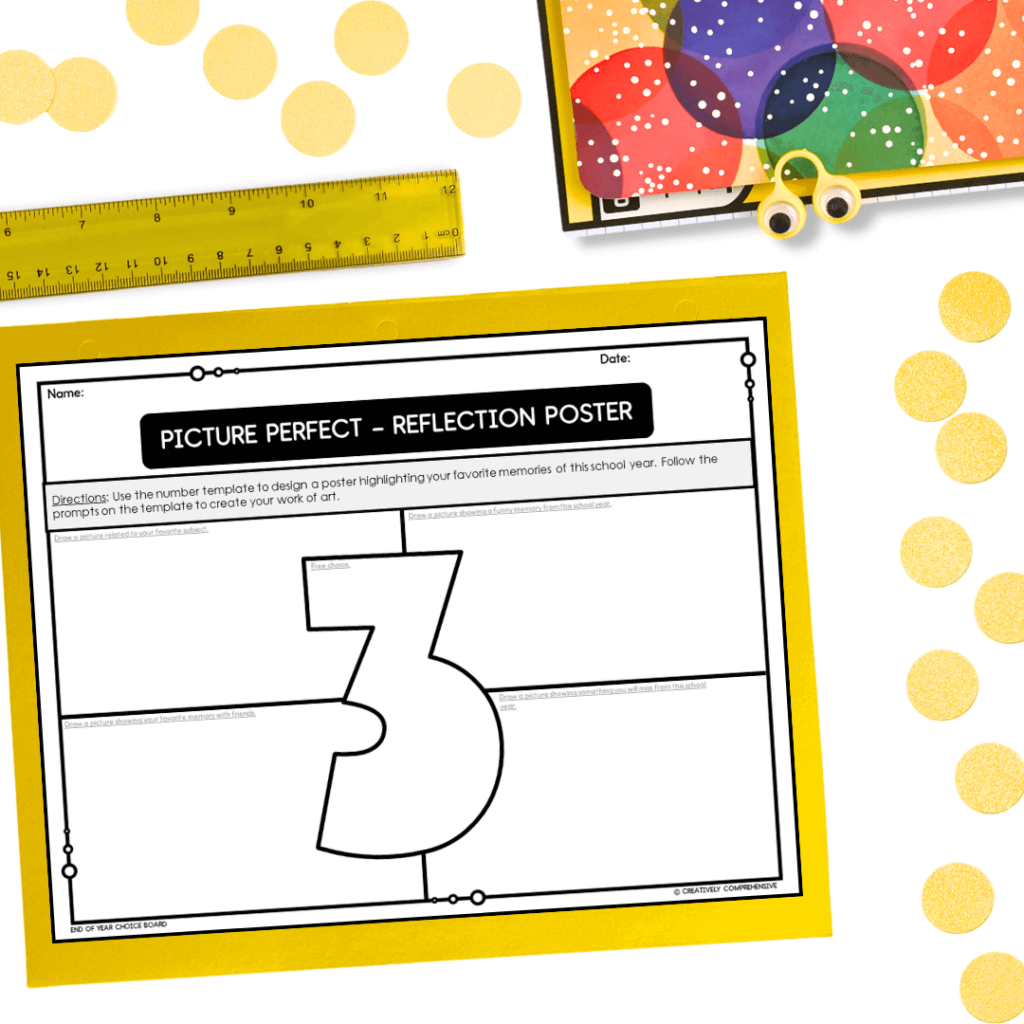
- Create a poster highlighting memories of the past year
- Write a podcast episode about a particular memory (if you have the capability, let students record their podcast)!
- Make a word search featuring vocabulary terms from one subject
- Create a book of advice for the students who will be in the class next year
- Make a board game using content from a favorite lesson
- Write an ode to the classroom
- Write and deliver thank you notes to school staff
- Compose a song or poem summarizing the best parts of the school year
If you’ve never used a choice board before, prepare to be amazed by what your students come up with! This is a really great opportunity to let your class’s creativity shine.
How to Use this Choice Board in Your Classroom
One of the best parts of a choice board is its flexibility.
You do not have to use it just one way. In fact, it works even better when you make it fit the rhythm of your classroom.
Option One: Use it across the final week of school
Give each student a copy and have them complete one activity each day. This keeps things simple and gives the class a predictable routine during a week that may otherwise feel all over the place.
Option 2: Use it during centers or rotations
If your schedule is still somewhat structured, place the choice board in one rotation and let students complete selected tasks during independent work time.
Option 3: Use it for early finishers
This is a great answer to the constant “I’m done” question that starts picking up at the end of the year.
Option 4: Let students complete a row, column, or diagonal
This adds just enough structure while still preserving choice.
Option 5: Turn it into a mini celebration of learning
Have students share one completed task with the class, a partner, or a bulletin board display. That small extra step makes the activity feel more meaningful and less like filler.
Why Upper Elementary Students Need Low-Prep Activities at the End of the Year
Because by May, your planning energy is not the same.
You’re not just teaching. You’re packing, organizing, communicating with families, handling transitions, and trying to finish strong. Low-prep end-of-year activities are not “less than.” They are practical, smart, and often exactly what students need, too.
A solid low-prep activity should do three things:
- Save time with easy set up and clear directions
- Keep engagement high with choice and flexibility
- Make the final day count, with purposeful, meaningful activities
A choice board hits all 3 of these, easily…and all you have to do is hit print.
What It Might Look Like in Your Classroom
Picture this.
It’s the second-to-last week of school. Half your class is buzzing about summer. A few students are done with everything in record time. Someone is asking about the field day schedule. Someone else cannot find their folder. You still have desks to clean out and a stack of papers to sort.
Instead of trying to hold everyone in one lockstep lesson, you pull out the choice board.
You can see the difference almost right away. Some students choose to reflect and write about the year. Others light up when they spot a more creative option. A student who usually needs three rounds of encouragement just to start writing is already halfway in, mostly because they got to choose a format that clicked. The room still sounds like the last week of school. Chairs move. Kids chat. Someone drops a pencil. But the work is happening, and the class feels busy in the best possible way.
Tips for Getting the Most Out of Your End of the Year Choice Board
A few simple moves can make this resource work even better.
- Preview the board before students begin so expectations are clear
- Decide ahead of time how many tasks students need to complete
- Choose whether students can work alone, with partners, or both
- Model one activity first for students who need support getting started
- Set a share-out option so completed work has an audience
- Keep materials simple so you are not adding prep to your own plate
You can also differentiate by assigning certain boxes to specific students or offering a required task plus free-choice options.
Grab the End of Year Choice Board
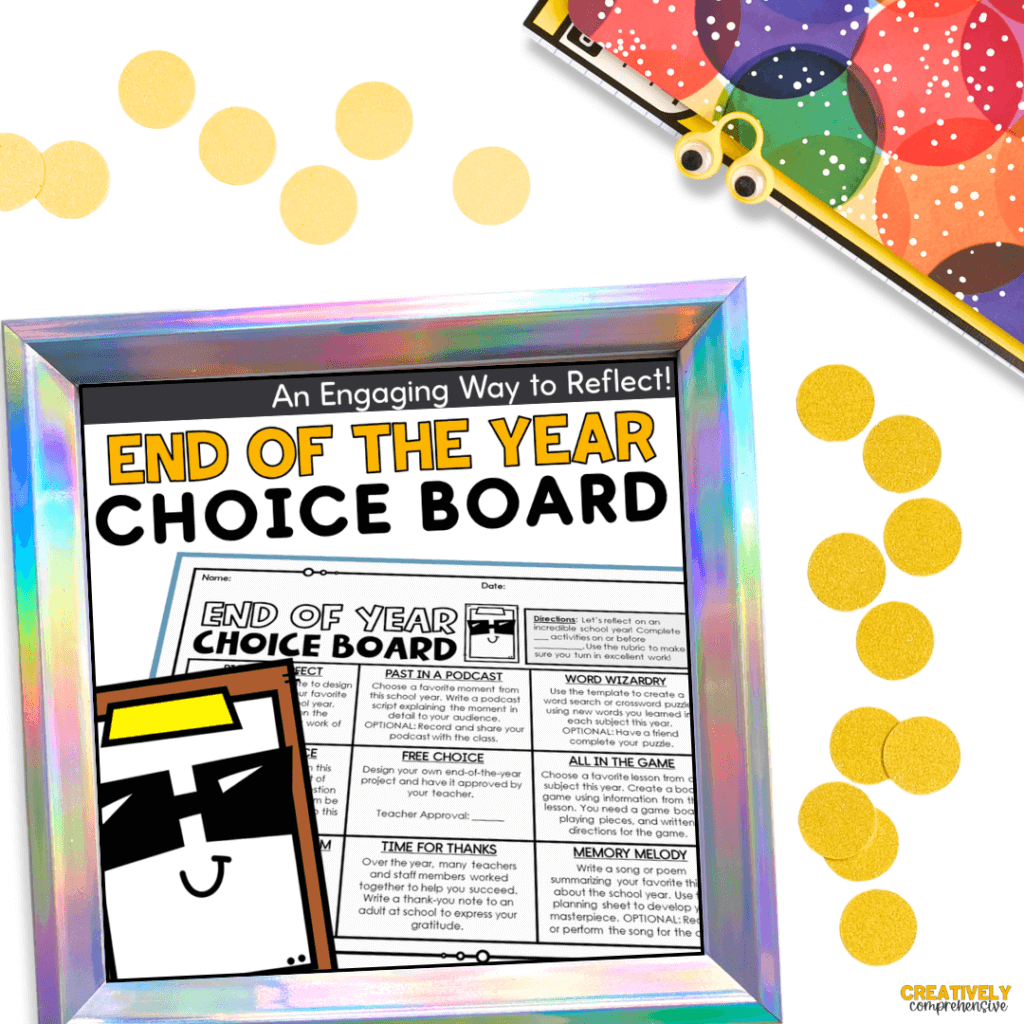
If you want an easy way to keep your upper elementary students engaged during the final days of school, this end of year choice board is a simple solution that still feels meaningful.
You can use it to bring structure to the chaos, give students voice and choice, and make those last days a little easier on everyone.
End of the Year Choice Board FAQ
Good end of year activities for upper elementary students are engaging, low-prep, and still meaningful. Reflection writing, creative response tasks, memory activities, class celebration prompts, and choice boards all work well because they balance fun with structure.
Choice, variety, and short clear tasks usually work best. Students are more likely to stay focused when they can choose between activities and work through tasks that feel manageable during a week filled with excitement and schedule changes.
A choice board is a set of activity options that lets students choose how they will respond, practice, or reflect. Teachers use them to increase engagement, support independence, and offer multiple ways for students to show their learning.
Yes. They are a strong fit for grades 3–5 because students are capable of independent work but still benefit from guided choices. That balance helps teachers maintain structure while giving students more ownership.
Absolutely. It works especially well for early finishers during the final weeks of school because it gives students purposeful options instead of unstructured downtime.
Final Thoughts
The end of the year is busy in the best and hardest ways.
You want the days to feel fun, but you also want them to feel calm enough to manage. You want students engaged, but you do not want to spend hours prepping one more elaborate activity.
That is why I always recommend choice boards to upper elementary teachers.
They are practical. They are flexible. And during the last stretch of school, that combination is hard to beat.