Low-Prep, Standards-Based Resources for Upper Elementary

Why You Should Review Classroom Rules After Winter Break

by: Marianna Monheim

Updated: 12/28/2025

Upper elementary students need a clear reset after winter break. Why? Well, because routines fade, expectations get fuzzy, and students return with differing energy, maturity, and focus levels. Reviewing classroom rules and procedures helps restore consistency, rebuild community, and set the tone for a smoother second half of the year.

Fast Takeaways for Busy Teachers:

  • Procedural memory dwindles over winter break, even for your most reliable students.
  • A reset will protect your instructional time AND stop behavioral issues before they start.
  • It’s easier to reteach expectations now than in mid-February when everything goes off the rails
  • A structured review of your classroom expectations can help you simplify the process.

Table of Contents

The “New Year Classroom Energy Shift” — And Why It Matters

It might be a short period of time, but winter break changes kids.

They come back taller.

Louder.

Hungrier.

Chattier.

…and for a few days, they even seem surprised to be awake before 9 am.

Which means those routines and procedures that were running smoothly in December? Cue the Mariah Carey “I don’t know her” meme. You’ve got students getting up and walking around while you’re teaching a lesson. Forgetting where to turn in their papers. Running to the door to be first for lunch.

Reviewing procedures is no longer a thing to do if you have time. It’s an activity that needs to be done before you begin anything even remotely academic.

Why Should Teachers Review Classroom Rules & Procedures After Winter Break?

Students thrive when expectations are consistent and predictable. After winter break, their routines and attention habits naturally fade, so reteaching procedures creates a clear, safe structure for the months ahead. This step prevents behavior issues and maximizes learning time.

Let’s break down what’s really happening behind the scenes:

Breaks Disrupt Procedural Memory

Upper elementary routines aren’t just rules, they’re habits. And habits weaken without repetition.

Think about it:

  • How to enter the room

  • What to do when they finish work

  • Noise level expectations

  • Group work norms

  • Chromebook/tech procedures

Even strong students forget the sequence and expectations because they’ve been out of rhythm for two weeks. Research indicates that predictable routines reduce interruptions and increase teaching time because students require less teacher involvement.

So when your top student asks if they have to write their name on their paper? That’s you cue that everyone needs a reset.

New Social Dynamics, Coming Through

In those few short weeks, friend groups can shift. Confidence changes. Some kids return feeling bold, while others come back anxious or withdrawn.

When social energy resets, so should your structures.

Revisiting expectations around:

  • group work

  • partner selection

  • voice levels

  • movement around the classroom

  • conflict resolution

…helps stabilize the classroom as students renegotiate their social roles.

This is also where a solid “after break expectations” routine pays off, because you’re not just re-teaching procedures, you’re re-teaching how to be together.

Mid-Year Maturity Jumps (and Dips)

Wouldn’t you know it…winter break in upper elementary hits right when kids experience noticeable developmental changes:

  • attention span adjustments

  • emotional sensitivity shifts

  • increased need for independence

  • changing academic confidence

A procedures review helps you re-anchor the class to what still matters, while taking into account their developmental needs.

Behavior Issues Are Easier to Prevent Than Correct

Confusion: it’s a big reason unwanted behaviors start to pop up.

9 times out of 10, if students know what to do, they’ll do it (sometimes with a gentle nudge or two).

You’re going to want to nip things in the bud by reviewing expectations now vs two months from now.

Reviewing Expectations Rebuilds Classroom Safety

After time away, some students return craving safety and predictability. Others come from chaotic or emotionally stressful breaks.

Reviewing expectations communicates:

“You belong here.”
“This space is safe.”
“We know what to do together.”

A clear reset reduces anxiety and boosts academic engagement, which is what we all want.

How a Structured Review Resource Helps Manage After Break Expectations

This type of after-break expectations resource works especially well for upper elementary because it keeps the reset purposeful instead of punitive. It typically includes a discussion or reflection sheet, a clear rules and procedures overview, student-friendly activity pages, expectations review prompts, class norm-setting conversation starters, and visual reminders for essential routines so expectations stay visible after the lesson ends.

Using a Structured Review vs. An Informal Discussion

A PREPARED PLAN

Teachers are tired after break, too. Having things prepared ahead of time takes the mental load off of you.

COVERS ALL YOUR POINTS

Ensure no routines are missed or assumed. No, "Oops, I forgot to address water bottle breaks" 15 minutes later.

STUDENT-CENTERED REFLECTION

A structured review takes the spotlight off you and puts it where it belongs: on the students.

CONSISTENT TONE

This will keep your discussion calm, centered, and academically focused.

SMOOTH TRANSITION

By laying it all out at the beginning of your first week back, you won't have to redirect or reteach routines as much.

What Classroom Procedures Are Most Important to Review?

We all know there’s an invisible clock ticking towards THE TEST every second of upper elementary, so if you’ve got admin and a pacing guide breathing down your neck, I’d suggest focusing on these routines:

  • Morning routines

  • Lining up & hallway behavior

  • Technology use

  • Group work expectations

  • Noise level signals

  • Restroom procedures

  • Turning in assignments

  • Early finisher routines

  • Supplies and materials

  • Dismissal routines

SHOULD a 5th grader know how to line up in January? Yes, but a little reminder never hurt anybody. Taking some time to frontload these procedures means your lessons later will run more smoothly.

When Should This Review Start?

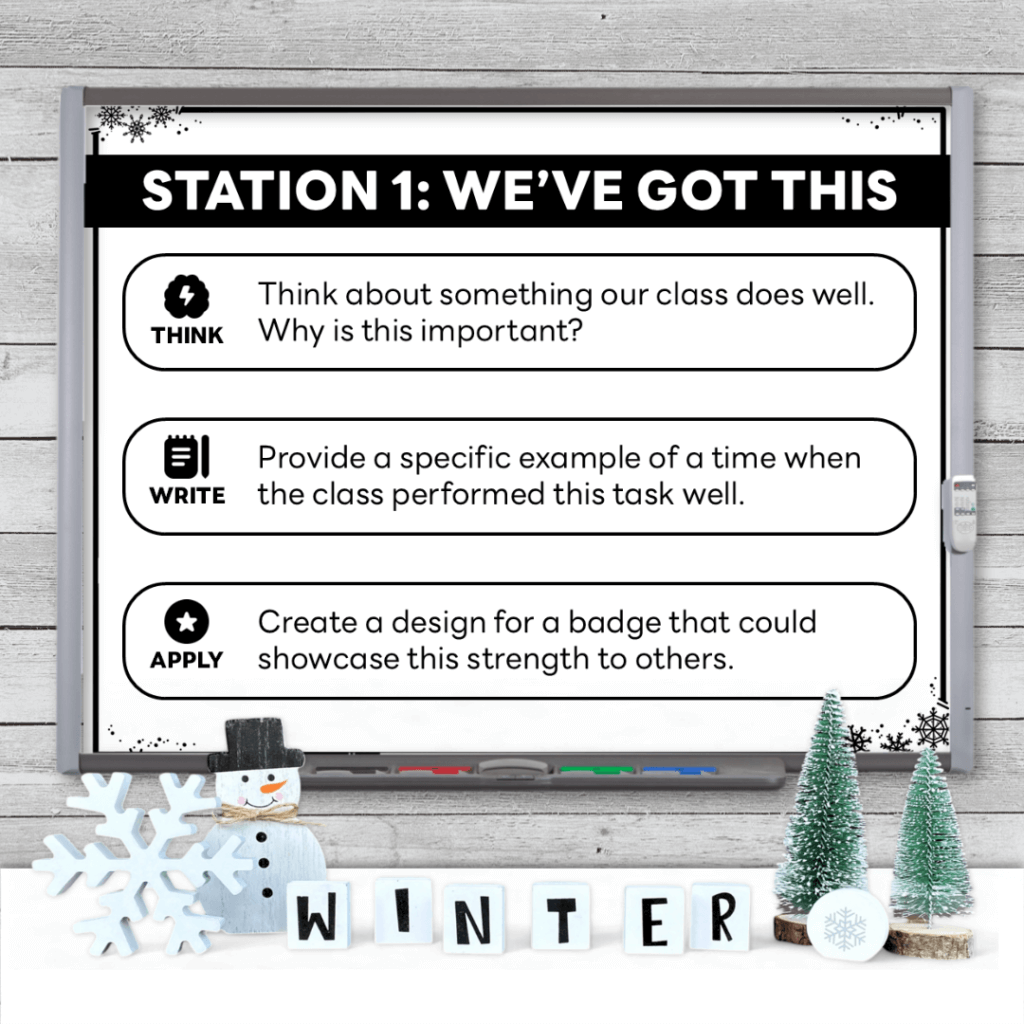
Begin on Day 1 back from break and keep it going through the first week. Students need repetition, modeling, and practice, but they also need a chance to name what’s working and what isn’t. A student-led check-in turns “reminders” into shared agreements everyone can follow.

Use quick warm-ups, partner chats, or short daily refreshers where students identify one routine that’s solid and one that needs attention. That keeps expectations visible and gives students ownership instead of passive compliance.

Why Does This Matter?

Imagine this:

It’s the first Monday back. The bell rings, and instead of unpacking quietly, half the class crowds your desk to tell holiday stories. Someone lost their Chromebook charger. Someone else forgot how morning work works. By 9:15, you’ve redirected the class twelve times.

A structured expectations reset fixes this faster when students help diagnose it.

Because the problem is not that students “don’t know better.” The problem is that routines are only routines when everyone is clear on them. When students identify what’s slipping and what needs to change, the class moves from “rules you said” to “expectations we agreed to.”

Never forget that the majority of students CRAVE expectations and routines. When they have clarity about how the classroom should be run, they’ll take more ownership.

After Break Expectations: A Checklist for Teachers

Ready to prep your routine review? Here’s some points to consider:

  • Identify the top 10 procedures that protect time, safety, and focus

  • Ask students to name what’s going well and what needs a refresh

  • Guide students to connect routines to real outcomes (learning time, fairness, calm)

  • Re-teach using modeling and practice, then let students practice it the right way

  • Co-create a few “community commitments” students can actually say out loud

  • Reinforce daily for the first week with quick student check-ins

  • Celebrate improvements and call out the behaviors that support the community

…and if you’re looking at that list and thinking sounds great but I have zero time to devote to that, you can always grab my After Break Expectations Student Led Slideshow on TPT for just a buck.

Frequently Asked Questions

Final Thoughts

Winter break does not erase everything, but it does blur the routines that keep an upper elementary classroom running. A quick review of after break expectations early on saves you from weeks of tiny corrections later. If you want a student-led way to do that reset, the After-Break Expectations activity on TpT gives students space to reflect on what’s working, what needs a refresh, and how they can support the classroom community.

👉 Get the slideshow here on Teachers Pay Teachers.

More January Activities for Upper Elementary Teachers