by: Marianna Monheim Updated 4/8/2026
If you’re looking for end of year activities for upper elementary students, the best options are low-prep, engaging, and flexible enough to handle the unpredictable last days of school. Activities like choice boards, reflection projects, and creative tasks help maintain structure while giving students independence.
The TL;DR for Busy Teachers
- Use low-prep, flexible activities (not complicated projects)
- Give students choice to boost engagement
- Focus on reflection + creativity, not just filler
- Keep structure — but loosen control slightly
Table of Contents
The last 10 days of school are their own category.
They do not feel like regular teaching days, and pretending otherwise usually backfires. Schedules get interrupted, students are extra energized, and somehow you are still supposed to wrap things up, stay organized, and keep meaningful learning going at the same time.
I remember one year planning a lesson with multiple steps, materials to pass out, and far more teacher direction than that week could support. It looked workable when I planned it. In the room, it was obvious almost immediately that I was asking for more focus and patience than anyone had left.
That was the point where I stopped trying to force the usual routine to work. Instead, I started planning activities that fit the energy of the end of the year instead of competing with it.
Everything felt more manageable after that.
What Are the Best End of Year Activities for Upper Elementary?
The best end of year activities for upper elementary students are ones that balance structure with flexibility—giving students engaging options while keeping classroom management intact.
Here’s what consistently works:
- Choice boards
- Reflection projects
- Creative writing or design tasks
- Memory-based activities
- Partner or small group tasks
Why Most End of Year Activities Fail (and What To Do Instead)
A lot of end-of-year activities fall apart for the same reason: they go too far in one direction or the other.
Some are too structured and ask students to function like it is still a regular instructional week. Others swing too far toward open-ended free time and create a different set of problems.
The better middle ground is structured choice.
Students still have options, which matters at that point in the year, but the boundaries are built in. That balance is a big part of why choice boards work so well at the end of the year. They offer flexibility without turning the class into a free-for-all.
Low-Prep End-of-Year Activities That Keep Students Engaged
If you’re exhausted (which… you probably are), these are the types of activities that work without adding more to your plate.
1. Choice Boards (Best Overall Option)
A choice board gives students multiple activity options so they can work independently while staying engaged.
Why it works:
- Students feel in control
- You don’t have to prep multiple lessons
- It works across several days
👉 This is the closest thing to a “set it and breathe” solution.
2. End of Year Reflection Activities
These help students process their year in a meaningful way.
Examples:
- “My biggest accomplishment this year…”
- “Advice for next year’s students…”
- “What I’ll remember most…”
These are simple, but surprisingly powerful.
3. Creative Projects (Without Heavy Prep)
Think:
- Design a dream classroom
- Create a summer bucket list
- Write a comic about the school year
The key is keeping it open-ended but structured enough to guide them.
4. Partner or Small Group Activities
At this point in the year, students want interaction.
Let them:
- Interview each other
- Work on shared tasks
- Present mini-projects
Just keep expectations clear, and it won’t get messy.
Keep Classroom Management Under Control at the End of the Year
This is usually where things start to unravel. What helps is giving students enough structure to be successful. Clear expectations, visual directions, shorter tasks, and defined choices all make the activity easier to manage.
One of the most useful shifts I made was getting more specific about what students were supposed to do. Instead of leaving the task too open-ended, I started saying: choose two activities and complete both fully. Adding a simple rubric made that structure even clearer, so students could follow directions, check their work, and stay more independent without needing help every five minutes.
The Done for You Option
Let’s be real: you don’t want to build this from scratch.
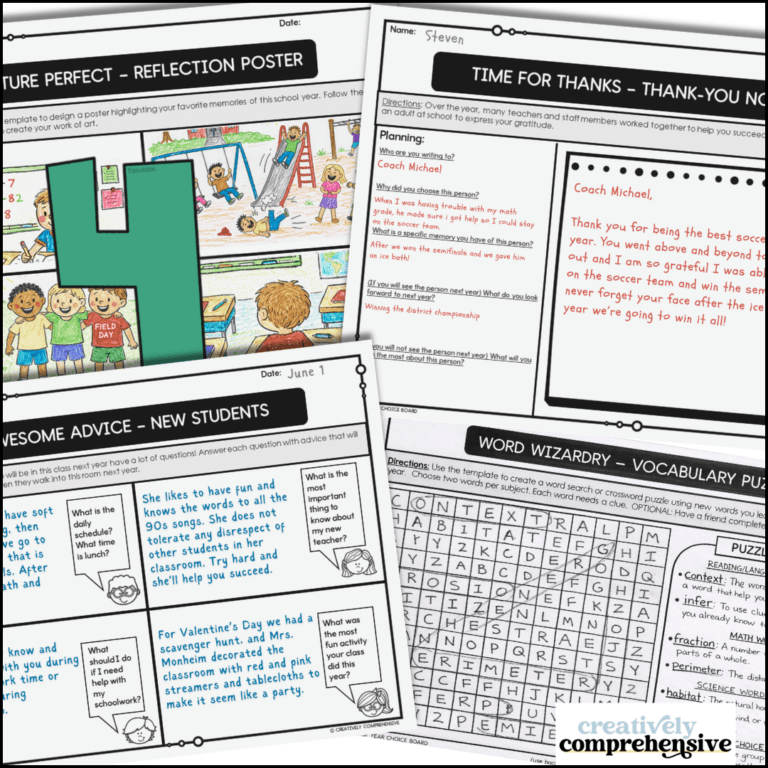
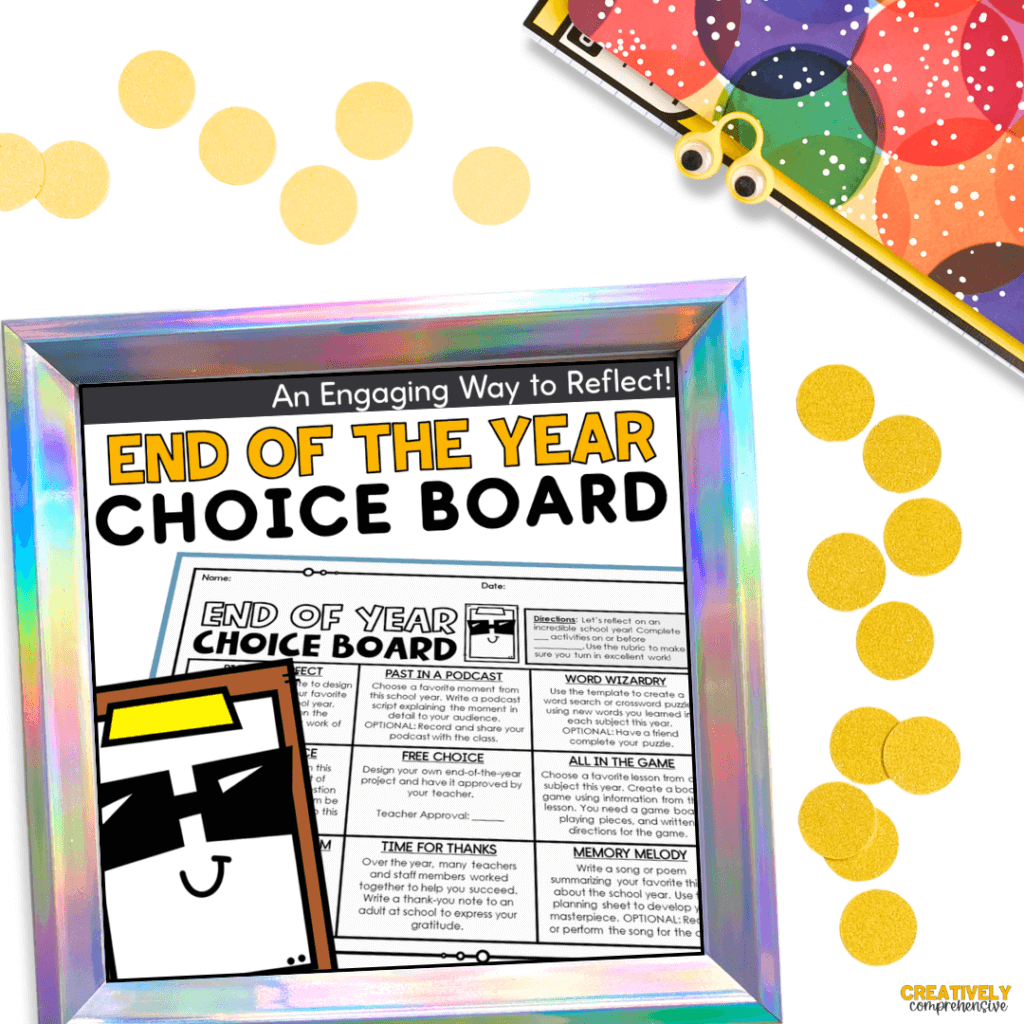
That’s why I created this solution: an end of the year choice board.
It includes:
- Ready-to-use activities
- Built-in structure
- Student choice without chaos
- Multiple days of engagement
👉 You can check it out here: End of Year Choice Board
When I switched to this type of setup for the last weeks, I was able to keep my students engaged, and start tackling some items on my to-do list.
People Also Ask
Fun end of year activities for upper elementary include choice boards, reflection writing, creative design tasks, and collaborative projects. These activities balance engagement and structure, helping students stay focused while still enjoying the final days of school.
The best way to keep students engaged is by using low-prep, flexible activities that include student choice. Structured options like choice boards or short creative tasks help maintain focus while adapting to end-of-year energy levels.
Low-prep activities include printable choice boards, reflection prompts, drawing or writing tasks, and partner-based activities. These require minimal setup but still keep students meaningfully engaged.
Yes. Choice boards improve classroom management by giving students clear options within structured boundaries. This reduces downtime and keeps students focused during less structured times of the school year.
Teachers should focus on activities that balance structure and flexibility, such as reflection tasks, creative projects, and student-choice activities. The goal is to maintain engagement without adding unnecessary stress or prep.
Final Thoughts
By the end of the year, you do not need a Pinterest-perfect lesson.
You need something that runs smoothly, keeps students engaged, and does not leave you more exhausted than you already are. That is enough.
A lot of end-of-year planning gets easier once you stop aiming for perfect and start aiming for practical. The goal is not to impress anyone. The goal is to use activities that hold up in a classroom that already feels different from normal.
Additional FAQs
Yes. These strategies work especially well for 5th grade because students are independent enough to manage choice-based tasks.
Choice, variety, and short clear tasks usually work best. Students are more likely to stay focused when they can choose between activities and work through tasks that feel manageable during a week filled with excitement and schedule changes.
Yes. Choice-based activities naturally support differentiation by allowing students to select tasks that match their level and interest.