by: Marianna Monheim Updated 5/13/2026
Summer school get-to-know-you activities work best when they feel low-pressure, fast to set up, and genuinely helpful for both students and teachers. This printable All About Me summer school poster helps upper elementary students introduce themselves comfortably while giving teachers useful insight into personalities, interests, goals, and learning preferences — without the awkward “share a fun fact” moment.
The TL;DR for Busy Teachers
✔️ Designed specifically for summer school and ESY groups
✔️ Great for the first day or first week of summer school
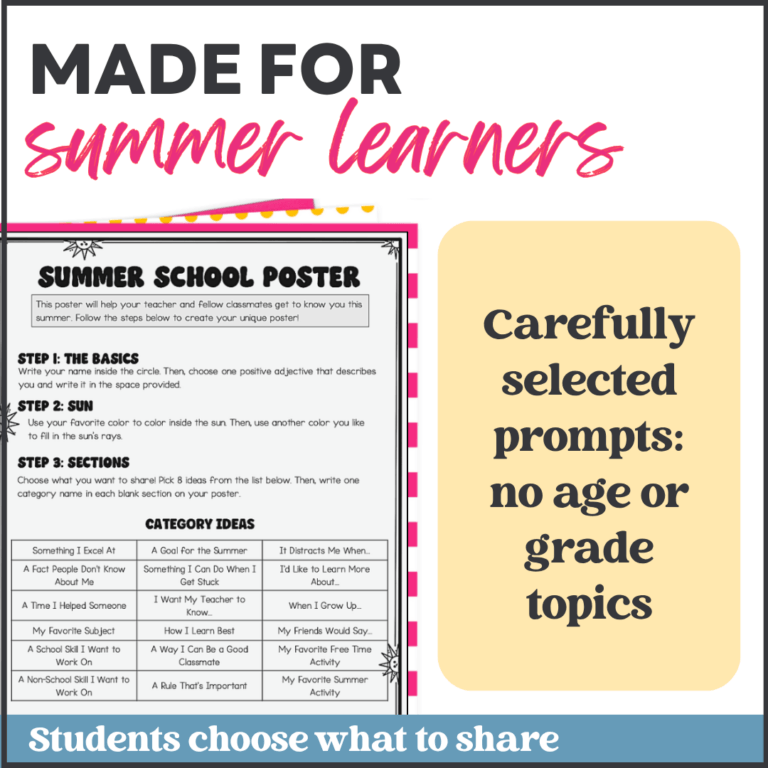
✔️ Students choose 8 out of 18 prompt categories
✔️ No awkward age or grade-level questions
✔️ Finished posters double as a summer school bulletin board
Grab the print-and-go-resource on TPT
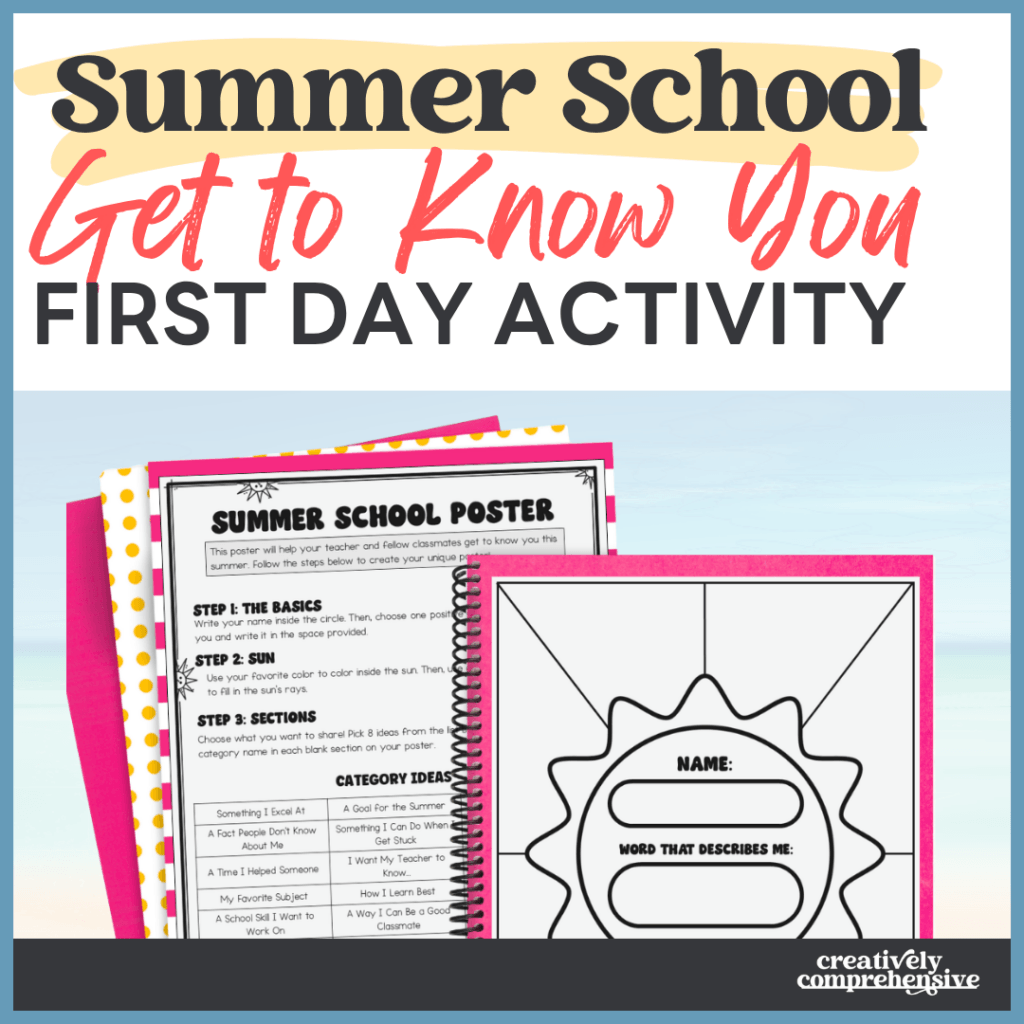
Table of Contents
Summer school has a very different energy from the regular school year.
The students don’t always know each other. Sometimes they’re coming from different schools. Different classrooms. Different grade levels. And honestly? Teachers are trying to learn names, personalities, needs, and group dynamics incredibly fast.
There’s nothing worse for teachers and students than a dead-silent classroom, because nobody wants to be the first person to speak.
That’s why low-pressure relationship-building activities, like this summer school get-to-know-you poster, matter so much during summer learning programs. Organizations like the National Summer Learning Association continue emphasizing the importance of meaningful summer learning environments that support both academic growth and student engagement. This activity covers both.
Summer School Get to Know You Activities Need to Work Differently
Most “All About Me” activities were clearly designed for the traditional back-to-school season.
You know the ones.
“What grade are you in?”
“How old are you?”
“What did you do this summer?”
That works fine in a standard classroom. But summer school groups are often mixed in ways that make those questions uncomfortable or awkward.
One student might be repeating material. Another might be attending ESY services. Another may be years older than everyone else in the room.
A good summer school icebreaker should help students connect without putting them on the spot.
An easy way to accomplish that? Have students choose what they want to share.
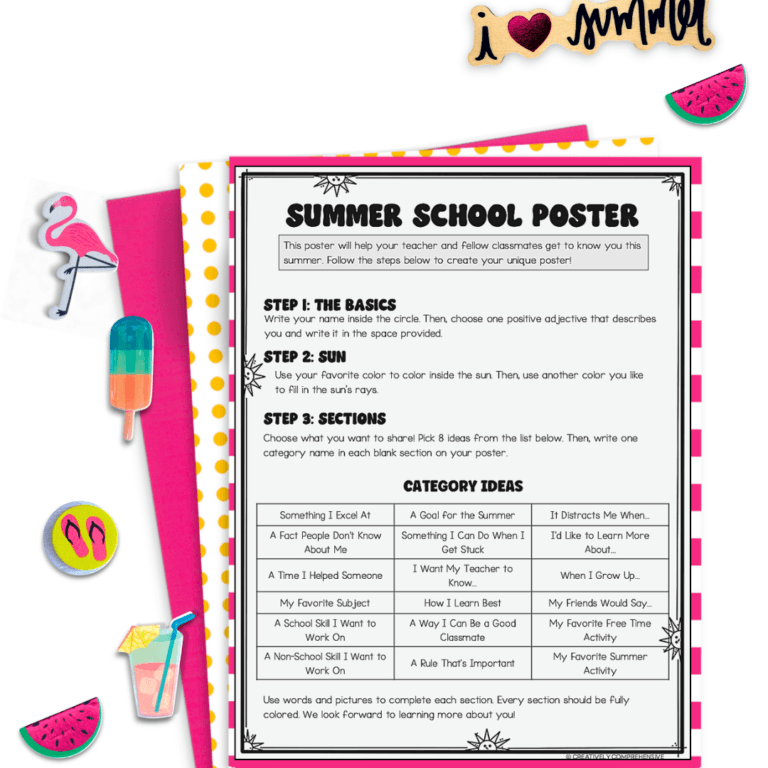
What Makes This Summer School Poster Activity Different?
This printable activity gives students real choices from the start.
Students choose 8 sections from 18 prompt categories to create a poster that reflects their interests, personality, and learning style.
Some students jump straight into sharing hobbies and favorite things. Others are more comfortable talking about goals, strengths, or how they learn best.
For quieter students, it also removes some of the pressure that comes with traditional first-day introductions. Instead of having to think of the “right” thing to say in front of a brand-new group, they can ease into participation through a structured activity that still helps everyone get to know each other.
By the end, students have a finished poster, and you have a quick snapshot of the kids walking into your summer classroom.
This activity is designed to feel appropriate for upper elementary students. That matters, especially in summer school. A lot of first-week activities lean too young for rising 4th and 5th graders, and students notice fast.
This poster keeps the task approachable without making students feel like they were handed something meant for a much younger grade. They still get structure, visuals, and clear prompts, but the tone respects where they are developmentally.
People Also Ask
The best first day of summer school activities help students connect quickly without wasting instructional time. Low-pressure activities like student-choice posters, collaborative games, and simple icebreakers work especially well for mixed summer groups and ESY classrooms.
A strong summer school icebreaker should feel comfortable, flexible, and age-appropriate. Students in summer programs often come from different classrooms or schools, so activities that allow choice and reduce social pressure tend to work best.
Teachers can build classroom community during summer school by using short collaborative activities, student-choice introductions, and visual displays that encourage ongoing interaction. Bulletin board projects and partner activities help students connect naturally over time.
Yes — when designed appropriately. Upper elementary students respond better to activities that feel personalized and not overly childish. Choice-based prompts and creative formatting help older elementary students participate comfortably.
Printable discussion prompts, student posters, partner games, independent reflection sheets, and collaborative classroom displays are all effective low-prep summer school activities that require minimal setup.
Why Teachers Need Low-Pressure Summer School Icebreakers
Let me give you a quick example.
A teacher running a mixed summer intervention group may only have students together for a few weeks. There’s barely enough time to establish routines, let alone build relationships.
Traditional introductions eat up instructional time and often leave quieter students completely invisible.
A student-led poster changes the dynamic…and suddenly, you’re learning things you actually need to know:
- Who enjoys reading
- Who struggles with confidence
- Who likes working independently
- Who may need extra encouragement
- Which students already have common interests
That’s useful classroom insight, and you didn’t have to fight tooth and nail to get it.
Need more ideas? Try these resources from Understood.org.
How This Activity Helps Build Classroom Community Fast
Here’s a cleaner version with less stacking and less “tiny moments” sentimentality:
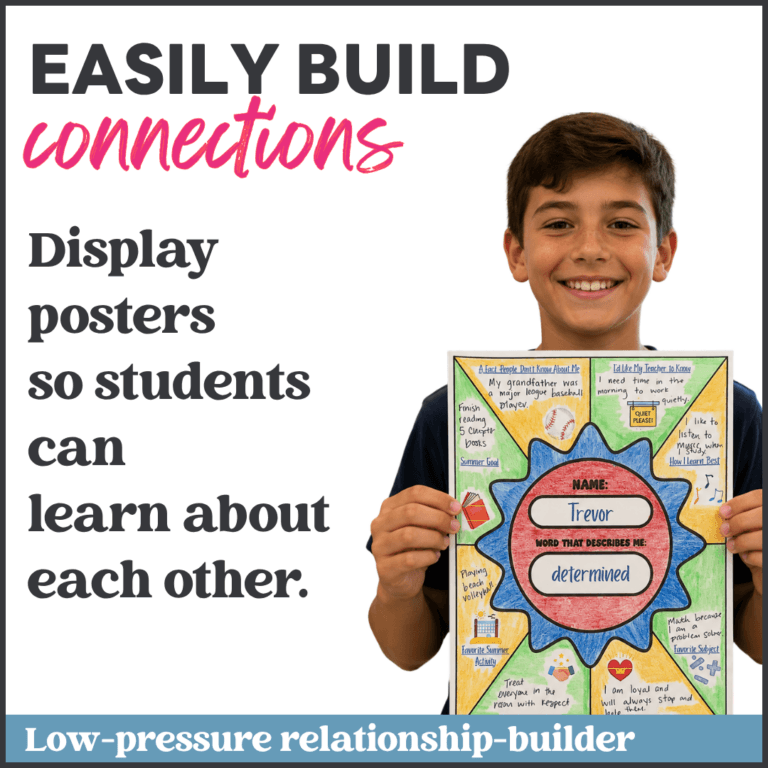
The finished posters can also become a simple summer school display.
That gives students a way to learn about each other over time, instead of trying to squeeze every introduction into one first-day activity.
A student might notice someone else likes soccer. Another might spot a shared favorite snack, hobby, book, or interest. Those small connections can make a new summer school group feel more familiar faster.
And in summer school, that matters. The timeline is short, so anything that helps students feel seen, known, and comfortable in the room is worth doing.
Who This Summer School Activity Works Best For
This summer school activity is a good fit for grades 3–5, especially when students are joining a new group, working across mixed grade levels, or starting a short-term summer program.
It works well for:
Grades 3–5
Upper elementary summer school
ESY programs
Mixed-grade classrooms
Intervention groups
New student groups
Teachers who need a low-prep first-day activity
The low-prep part matters.
Summer school already puts enough on your plate (hello compressed schedules, intervention needs, growth expectations, etc.). The last thing you want is a complex activity with too many moving parts.
This poster keeps the process simple: students choose their prompts, complete their sections, and create a finished piece that can be displayed or used as a quick student snapshot.
Better Than the “Tell Us a Fun Fact” Panic
I used to do traditional ice breakers, like “share a fun fact about yourself.”
Students froze. Others said, “I don’t know.” Some students repeated the fact of the person who went before them. Meanwhile, the floor tiles suddenly became very interesting.
This prompted me to switch to giving students a way to think, choose, write, and personalize before sharing. It lowered the pressure, gave them more control, and usually led to better answers than the uncomfortable first day spotlight.
Where to Find the Resource
The printable activity is available here:
Summer School Get to Know You Activity
Quick notes:
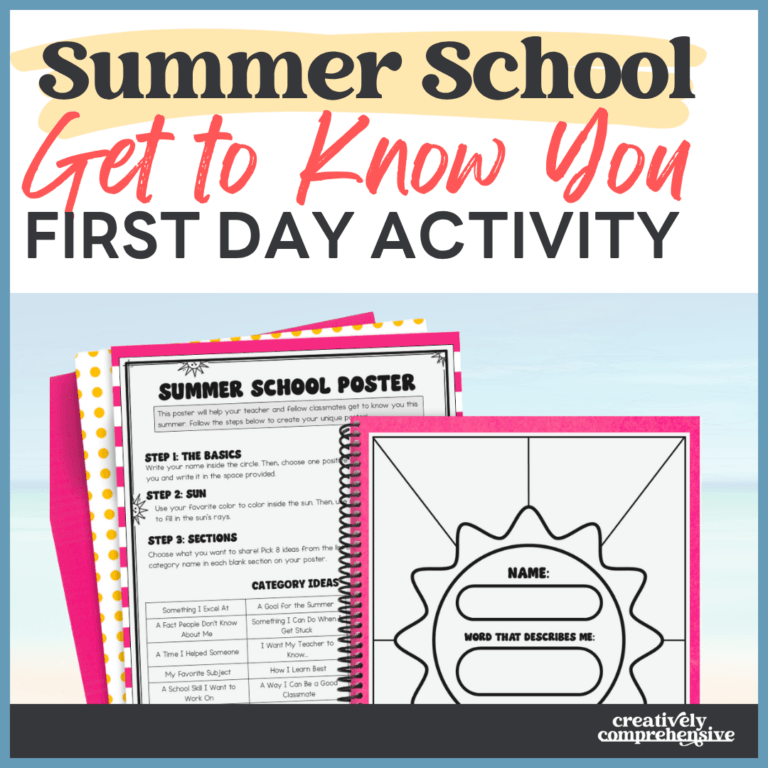
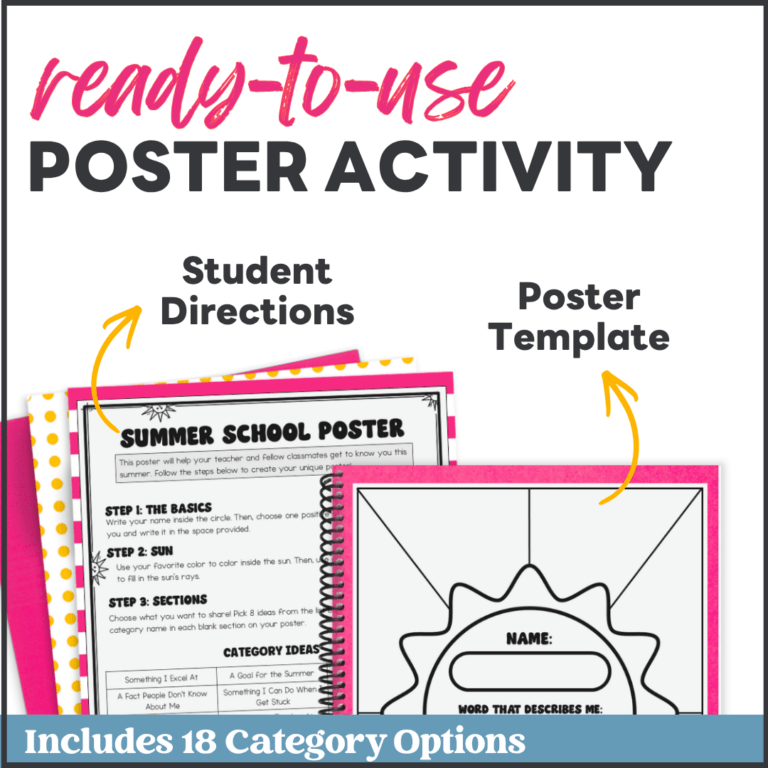
- Includes student directions and poster template
- Students choose from 18 prompt categories
- Ready-to-print PDF format
- Display-friendly layout for bulletin boards
Additional FAQs
Yes. The prompts are designed to work well for mixed summer learning groups, including ESY classrooms. The activity avoids awkward age or grade-level questions and allows students to choose what they feel comfortable sharing.
Most students complete the poster in about 30–45 minutes depending on coloring, writing detail, and classroom discussion time.
Absolutely. Many teachers use the completed posters as a summer school bulletin board or classroom wall display to help students continue learning about each other throughout the program.
The activity is designed primarily for grades 3–5 and upper elementary summer learners.