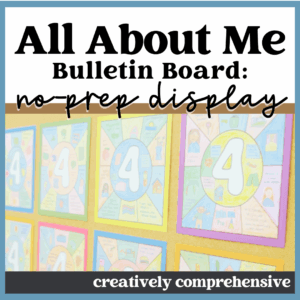
All About Me posters are one of the easiest ways to build classroom community during the first week of school. In upper elementary classrooms, they provide students with a structured yet creative way to share their interests, strengths, goals, and personality traits while helping teachers learn more about the students in front of them.
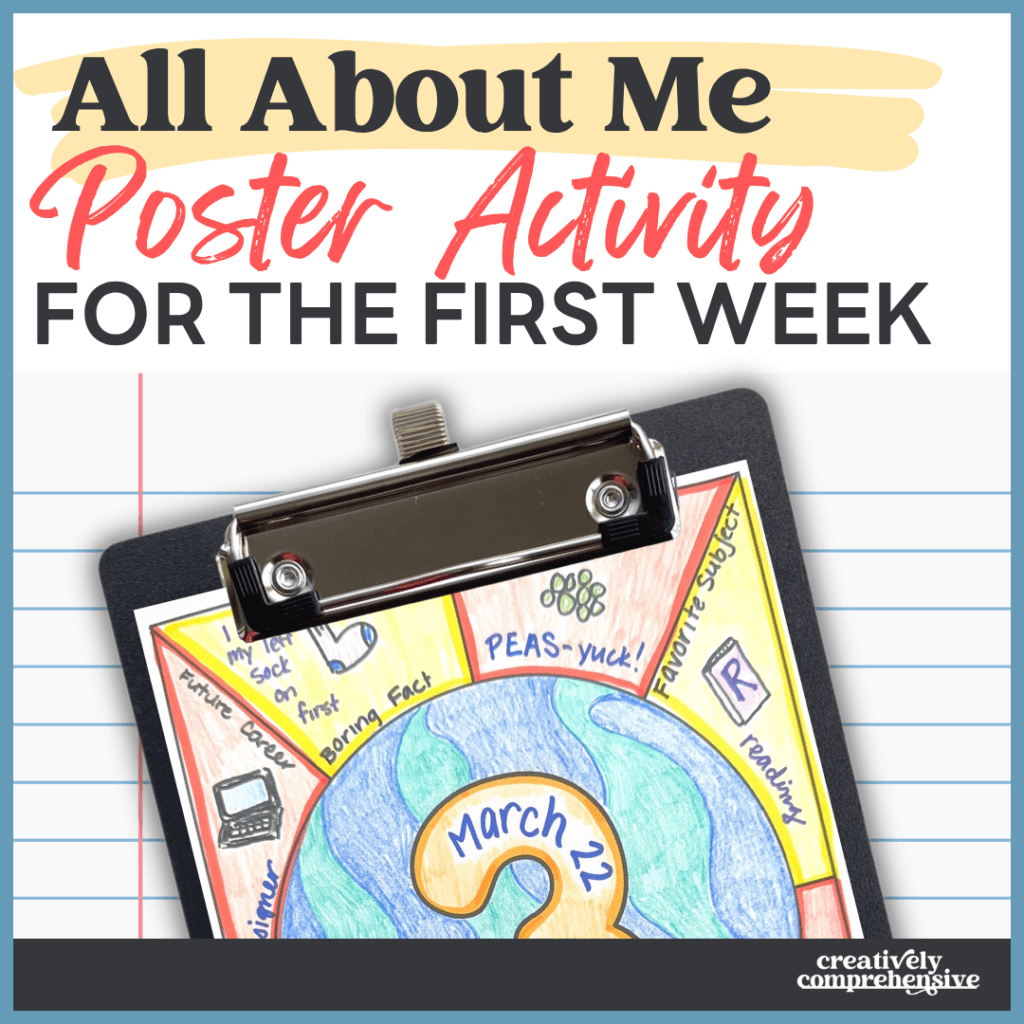
TL;DR: Why Teachers Love All About Me Posters
- Helps students get comfortable during the first week of school
- Encourages student choice and creativity
- Builds classroom community naturally
- Gives teachers insight into student personalities and interests
- Creates meaningful hallway or bulletin board displays
Table of Contents
The first week of school can feel a little uneven.
Some students come in ready to talk to everyone. Some are still figuring out where to sit, what to say, and how this new classroom is going to feel. Upper elementary students may want more independence, but they still need support settling into a new group.
That is why All About Me posters are still useful.
Not just because they make an easy bulletin board, although that part does not hurt.
They give students a structured way to share about themselves without putting everyone on the spot. They can choose what to include, how much to write, and whether to use words, drawings, or a mix of both.
That kind of choice helps students ease into the room. They start noticing shared interests, conversations feel less forced, and quieter students often have a way to participate without having to speak first.
Teachers also get a better look at who is in front of them, not just names on a class list.
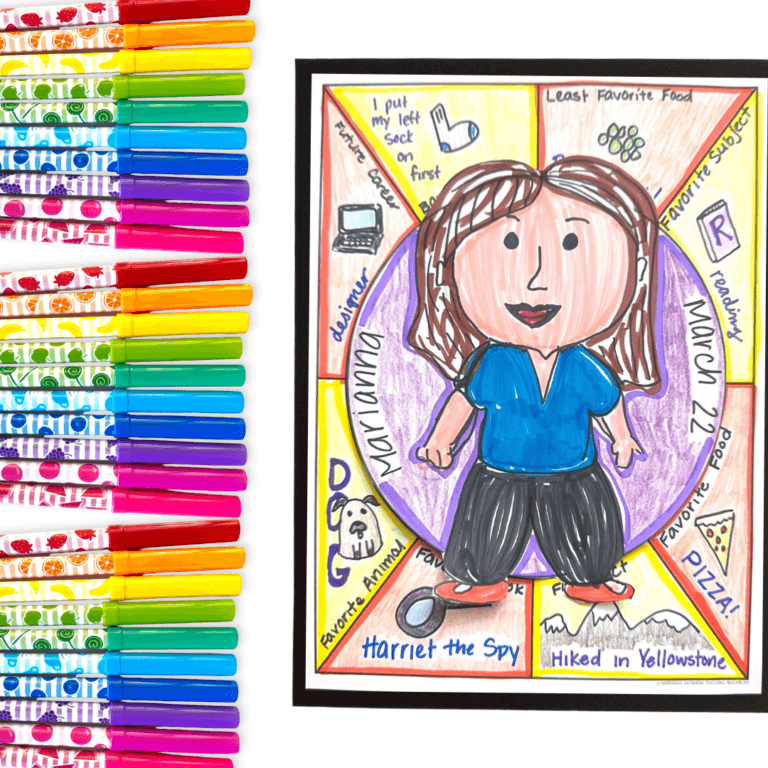
All About Me posters give students a structured way to share more about who they are. Most posters include details like hobbies, favorite things, goals, family, pets, personality traits, or experiences that matter to the student.
In upper elementary, it’s important to keep in mind students have done this activity multiple times.
To keep their interest, we have to add a new element to the same-old activity.
That element? Student choice.
However, we can’t forget we’re in the first week of school. Too much choice is not always a good thing. Instead, aim for guided choice. Students still have a clear task and expectations, but they also have enough flexibility to make the poster feel personal (and share what they want to share).
Why Use All About Me Posters During the First Week of School?
The beginning of the school year usually comes with some kind of get-to-know-you activity.
That part makes sense. Students need a way to share about themselves, and teachers need a way to start learning who is in the room.
But upper elementary students are not always excited about another round of basic icebreaker questions. By 4th or 5th grade, many of them have answered the same favorite color, favorite food, favorite animal prompts for years.
Student-choice posters give them a better way in.
Instead of all students responding to the same set of questions, they can choose the categories that best fit them. One student might write more about family or hobbies. Another might focus on sports, pets, books, travel, or goals. Another might use drawings to show more than they would say out loud.
That choice matters because it makes the activity feel less forced. Students still complete a structured poster, but they have enough flexibility to share something that feels true to them.
The result is usually more thoughtful work, better engagement, and finished products that tell you more than a stack of matching icebreaker sheets ever could.
Benefits of All About Me Posters
STUDENT CHOICE
CREATIVE FORMAT
STRUCTURED PROMPTS
VISUAL SHARING
DISPLAY READY
Builds ownership and engagement
Encourages students to make connections
Gives just the right amount of scaffolding to not overwhelm your new students
Encourages students to find and share connections
Doubles as an attractive back-to-school bulletin board
How All About Me Posters Build Classroom Community
The finished poster is helpful, but it is not the whole point.
The better part is what students start noticing because of the posters.
One student realizes someone else moved from the same city. Another spots a shared love of graphic novels. Two students who barely spoke at first suddenly discover they both play the same weirdly specific video game, and now apparently we have a friendship origin story.
That is the part that matters.
Early in the year, students are still figuring out where they fit, who feels safe, and who they might want to sit near without making it A Whole Thing.
All About Me posters give them something natural to talk about. They can notice shared interests, ask questions, and start conversations without having to stand up and perform a personality sample for the entire class.
That makes the activity especially useful for quieter students who may need a lower-pressure way to join in.
What Should Students Include on an All About Me Poster?
Some common categories include:
- Favorite books
- Favorite foods
- Hobbies and sports
- Family traditions
- Pets
- Future goals
- Favorite school subjects
- Fun facts
- Personality traits
- Summer memories
For upper elementary students, I also like adding a few deeper prompts.
Things like:
- Something I’m proud of
- A challenge I’ve overcome
- Something I want to learn this year
- A place that matters to me
Those responses tend to create more meaningful connections than surface-level favorites alone.
Why Student Choice Matters in Upper Elementary
Upper elementary students are in a very specific stage.
They still like creative work, but they are also much more aware of how their work looks, what their classmates might notice, and whether an activity feels too babyish.
When every poster looks exactly the same, they notice.
And they usually check out faster.
That is why student-choice formats work better for this age group. Students still have clear expectations, but they also get enough room to make the poster feel like theirs.
Easy Ways to Use All About Me Posters in the Classroom
This first day activity can easily expand into a more meaningful project. Here are a few extension ideas:
Bulletin Board Displays
Probably the most common option, and a teacher favorite.
Displaying student work immediately helps students feel like they belong in the space (not to mention it’s one less bulletin board you have to plan for).
Classroom Gallery Walk
Let students walk around silently and leave sticky-note comments or shared-interest notes on posters.
This works especially well for building peer connections.
Partner Introductions
Students use their posters to introduce each other instead of presenting themselves.
When they focus on sharing their posters, they’re less focused on the fact that they’re (gulp!) standing in front of their classmates.
Open House or Curriculum Night
Parents love seeing personality-centered work displayed early in the year.
It makes the classroom feel welcoming right away.
Writing Extensions
Students can turn poster sections into narrative or opinion-writing pieces later in the month.
More Tips for Making the Most of All About Me Posters
Keep directions simple
Too many rules can kill creativity fast.
Model your own example
Students always do better when they can see a completed version first.
Give students choices
Even small choices increase buy-in.
Avoid overly personal prompts
Not every student wants to share detailed family information publicly.
Be careful there.
Are All About Me Posters Good for Upper Elementary Students?
Yes, especially when the activity feels right for their age.
Upper elementary students still like creative projects, but they do not want something that feels too young or too scripted. They want enough structure to know what to do, with enough choice to make the work feel like their own.
That is where a strong All About Me poster works well.
It gives students a clear task, but it also lets them make decisions about what to share and how to present it.
Engagement usually drops when the activity feels like it could have been handed to a much younger grade level, or when every student is expected to fill in the same exact answers. Choice helps the activity feel more personal without making it harder to manage.
Frequently Asked Questions
An All About Me poster is a student-created activity that helps classmates and teachers learn more about each other through writing, drawings, interests, goals, and personal facts.
Students often include hobbies, favorite books, pets, goals, fun facts, family traditions, personality traits, and favorite activities. Upper elementary students usually respond well to prompts that allow creativity and personal choice.
Most upper elementary students can complete an All About Me poster in 30–60 minutes depending on the level of detail, coloring, and writing included.
These activities help students build connections, feel comfortable in a new classroom, and create opportunities for peer interaction during the first weeks of school.
Teachers often use bulletin boards, hallway displays, classroom gallery walks, or student spotlight walls to showcase posters during the beginning of the school year.
Final Thoughts
The best first-week activities are not always the flashiest ones.
Sometimes the activities that matter most are the ones that help students feel noticed without making a huge production out of it.
That is why All About Me posters keep making sense year after year.
Not because every poster turns into a perfect bulletin board sample. Most of them won’t, and that is fine.
They work because they give students a way to share something real about themselves during a week when everything feels new. They help classmates find small points of connection, and they help teachers learn more than a name on a roster.
For upper elementary students, that matters.
They are old enough to want choice and independence, but they still need reminders that they have a place in the room.
A simple poster can do that surprisingly well.
The Done for You Option
Want to make this activity even easier? Grab the ready-to-use All About Me Poster resource with student-choice templates, printable options, and display-friendly designs so you can prep once and start building classroom community right away.
This turned out to be a perfect resource for the first week of school. They looked great hanging on the wall for Back-to-School Night, too. I really like the way the pages are set up for students to choose what they want to share.
Cyndi, 4th Grade Teacher
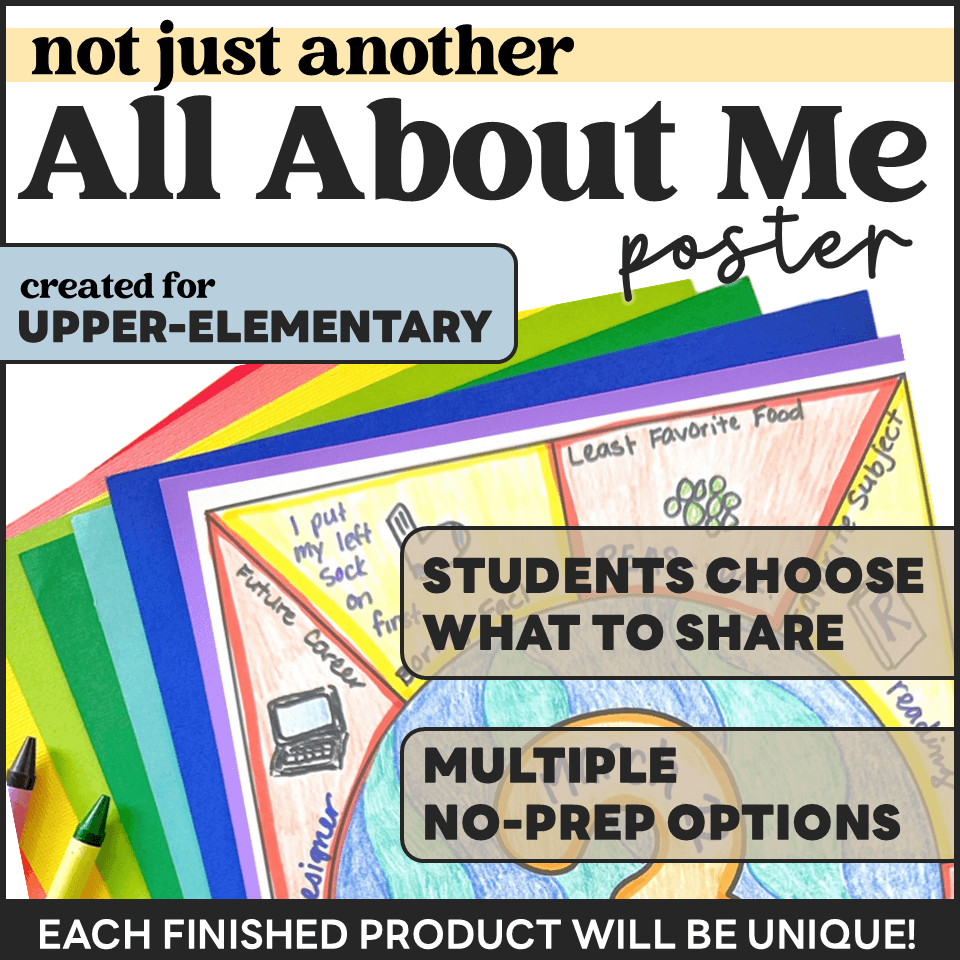
I really enjoyed using this resource instead of a typical get-to-know me activity for the first day of school. It allowed the students to choose what they wanted to tell me about.
Amanda, 3rd Grade Teacher