Low-Prep, Standards-Based Resources for Upper Elementary

5 Earth Day Activities for Upper Elementary Classrooms

by: Marianna Monheim Updated March 24, 2026

The best Earth Day activities for upper elementary students combine movement, critical thinking, and real-world connections. Hands-on tasks like scavenger hunts, vocabulary games, and collaborative challenges help students stay engaged while learning about sustainability in a meaningful way.

Earth Day Activities for Upper Elementary

Table of Contents

The 411 for Busy Teachers:

  • Upper elementary students need interactive, not passive, Earth Day activities
  • Movement-based learning (like scavenger hunts) boosts engagement
  • Vocabulary + real-world application = deeper understanding
  • Low-prep activities save time during busy spring schedules
  • The right activity can turn Earth Day into a memorable classroom experience


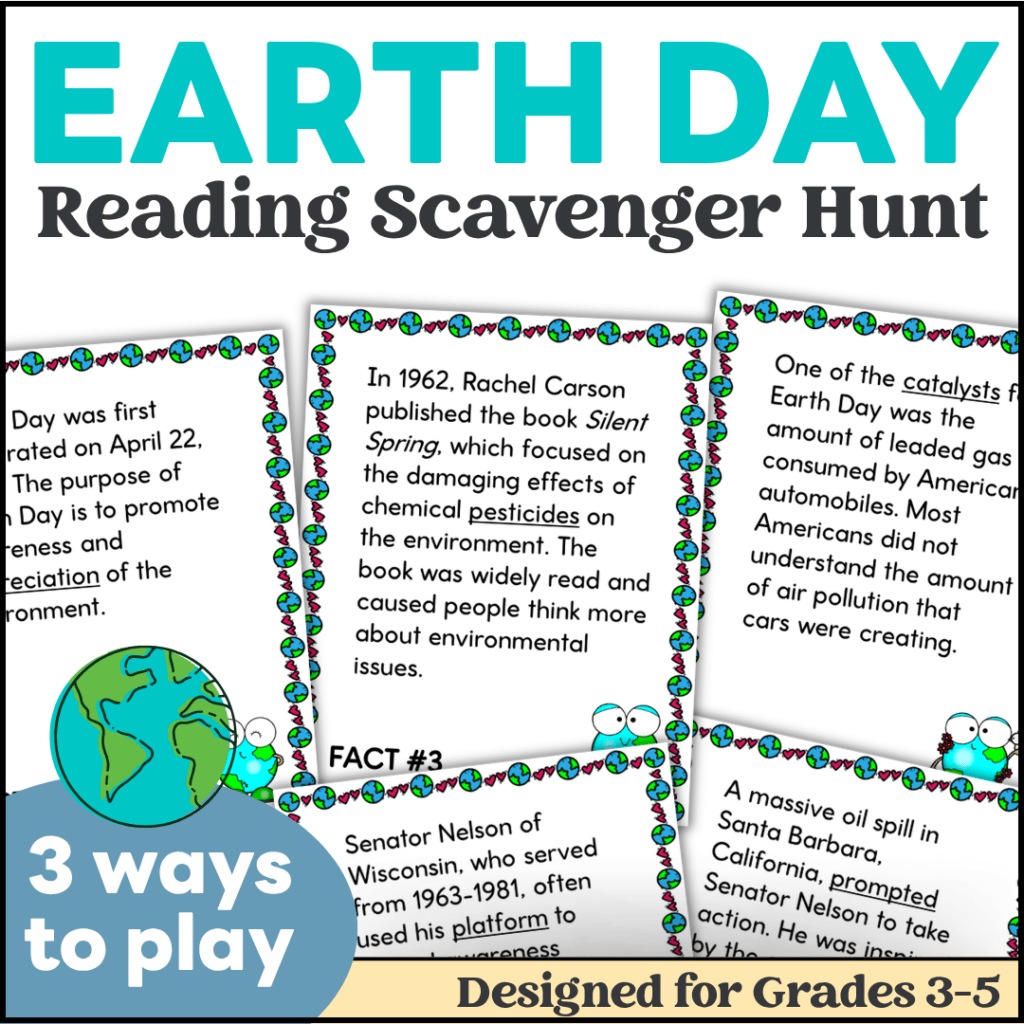
(Need a done-for-you Earth Day activity ASAP? Check out this scavenger hunt in my TPT store)

Let’s be real. By the time April rolls around, students are in an interesting headspace. So, when it comes to Earth Day, some will be fully engaged, asking thoughtful questions about recycling or pollution. Others are still in spring break mode and just going through the motions.

So how do we get both groups to sit up and pay attention? It’s all about the set-up.

When students are expected to sit quietly and complete a worksheet, engagement drops quickly. But when they are moving, talking, and working through ideas together, the energy shifts, and they stay involved.

What Makes an Earth Day Activity Actually Work in Upper Elementary?

Our friends in the intermediate grade have heard “reduce, reuse, recycle” before. They’ve watched the videos. They’ve done the crafts. It’s time to make them dig deeper and do something with what they learn.

A strong activity should:

  • Get them moving (yes—even 5th graders need it)
  • Let them work independently and collaboratively
  • Connect vocabulary to real-life situations
  • Feel a little like a game (without losing academic value)

People Also Ask...

We Need to Focus on Movement (Especially in April)

The simple truth is that movement-based Earth Day activities help upper elementary students stay focused and retain key vocabulary more effectively than passive tasks.

Think about what your classroom feels like in mid-April.

Testing is coming up. The schedule feels tight. And your students have more energy than usual. You can see it the second they walk in.

If you ask them to sit and complete another worksheet, it usually doesn’t go well. They either rush through it or check out halfway through.

But when you give them something that gets them up and moving, like a scavenger hunt or a write-the-room activity, the shift is noticeable.

They slow down. They actually read the questions. They talk through their thinking.

In other words, they’re doing the work…and getting something out of it.

5 Engaging Earth Day Activities for Grades 3–5

1. Earth Day Scavenger Hunt (Classroom Favorite)

Students move around the room finding clues, answering questions, and interacting with Earth Day vocabulary.

Why it works:

  • Builds independence
  • Feels like a game
  • Reinforces key concepts naturally

…and the best part? You don’t have to create one by yourself. There’s one ready to print and go in my TPT store.

2. “Reduce, Reuse, Rethink” Challenge

Give groups of students real-life scenarios:

  • “Your lunch creates a lot of trash—what would you change?”
  • “How can your school reduce plastic use?”


Students brainstorm solutions and present them. You can even have them come up with their own scenarios for other groups to think about: talk about a brain boost!

3. Focus on Vocabulary

Have students brainstorm a list of all the terms they know related to Earth Day. Then, have them use that info to:

  • Create posters depicting the terms
  • Write their own fill-in-the-blank sentences for each term, using context clues
  • Use a site like Canva to find images related to each term, and explain their thinking

4. Classroom Recycling Audit

Have students collaborate with a partner to think about classroom waste:

  • What gets thrown away most?
  • What could be recycled?
  • What habits need to change?

Have each pair present a plan to reduce waste in the classroom (i.e. empty wastebasket challenge, scrap paper center…let them get creative!)

5. “One Small Change” Reflection

Talk about a great journal question! Ask students:

“What’s one small change you can start today?”

As students get older, it’s important for them to understand that their choices, big and small, have an impact. The answers to this question can open a door to an incredibly meaningful discussion!

Compare and Contrast: Earth Day Activities

Type of Activity

 Engagement Level

Retention

Prep Time

Worksheet

Low

Low

Low

Video + Questions

Medium

Medium

Low

Scavenger Hunt

High

High

Low-Medium

The combination of structure mixed with interaction means your students will stay engaged and remember what they’ve learned!

Make Earth Day Meaningful in Upper Elementary

Most students won’t remember a worksheet.

But they’ll remember an activity.

If they were up, moving, talking things through, and figuring something out together, that sticks. If they were sitting quietly filling in answers, it usually doesn’t.

So when you’re planning your Earth Day lesson, it helps to think beyond the task itself.

Give them a chance to move around.
Let them talk and compare ideas.
Put them in situations where they have to think and solve something.

That’s what they carry with them after the lesson is over.

Want a done-for-you activity that works?

If you don’t have time to build something like this from scratch right now, it helps to have an activity ready to go that already does all of this.

You can find one here:
Earth Day Scavenger Hunt on TPT

It’s set up in a way that gets students moving around the room, working with Earth Day vocabulary, and staying focused without a lot of extra prep.

Earth Day Reading Scavenger Hunt

Frequently Asked Questions About Frayer Models

An activity like the scavenger hunt will take 35-40 minutes to complete. This keeps students engaged without losing focus, especially during busy spring schedules.

Yes. Earth Day is an easy topic to combine with other subjects. You’ll find reading and vocabulary activities included in this scavenger hunt!

Absolutely. Thoughtful pairing of students or adjusting the questions and recording sheets are just a few ways you can easily differentiate.

More Posts from Creatively Comprehensive

SCAVENGER HUNT RESOURCE ROUNDUP
earth day scavenger hunt
classroom scavenger hunts