Wondering how to grade reading response without spending hours staring bleary-eyed at student notebooks? Stop grading every single thing yourself. Teach students to use a checklist and rubric before turning work in, then use spot checks, peer review, and short reading conferences to review only the pieces that need your attention.
Want the shortcut over 10k teachers are already taking? Get the done-for-you menus here.
Quick Takeaways
- Students can handle most first-round grading themselves once they know how to use a checklist and rubric.
- You do not need to read every single word of a reading response.
- Use spot checks to keep students accountable.
- Use peer review before teacher grading.
- Save your detailed feedback for conferences and targeted reteaching.
The trope exists because it’s true. We’ve all wheeled out 30 notebooks to our car on Friday afternoon, telling ourselves this is the week we’re going to take them into the house and give meaningful feedback.
I’ll just grade them while I watch TV, we think.
Then Sunday night shows up, the notebooks haven’t left your car, and you wheel them back into your room Monday morning with just enough time to add a checkmark to each one.
Two things can be true at the same time. Reading response journals are a valuable part of upper elementary literacy…AND it’s a big pain in the you-know-what to grade them effectively.
Why Shouldn’t Teachers Grade Every Reading Response?
Let’s be clear: I’m not telling you not to read and grade your students’ response notebooks. I’m just suggesting that you may not have to read every single word.
Keep the goal of reading response in mind – you are getting a valuable, real-time look into your students’ comprehension. You are NOT judging an essay contest.
Here’s what I figured out after I decided it was the last time I was taking 30 response journals on a field trip to my house every weekend: let students start the grading process themselves.
Surrrrreeee, you may be thinking…I can’t trust these kids to get a drink out of a water fountain right outside the classroom door, but I’m going to let them grade their own journals??? Listen, I get it. It didn’t work for me either until I figured out the trick: lead with the rubric.
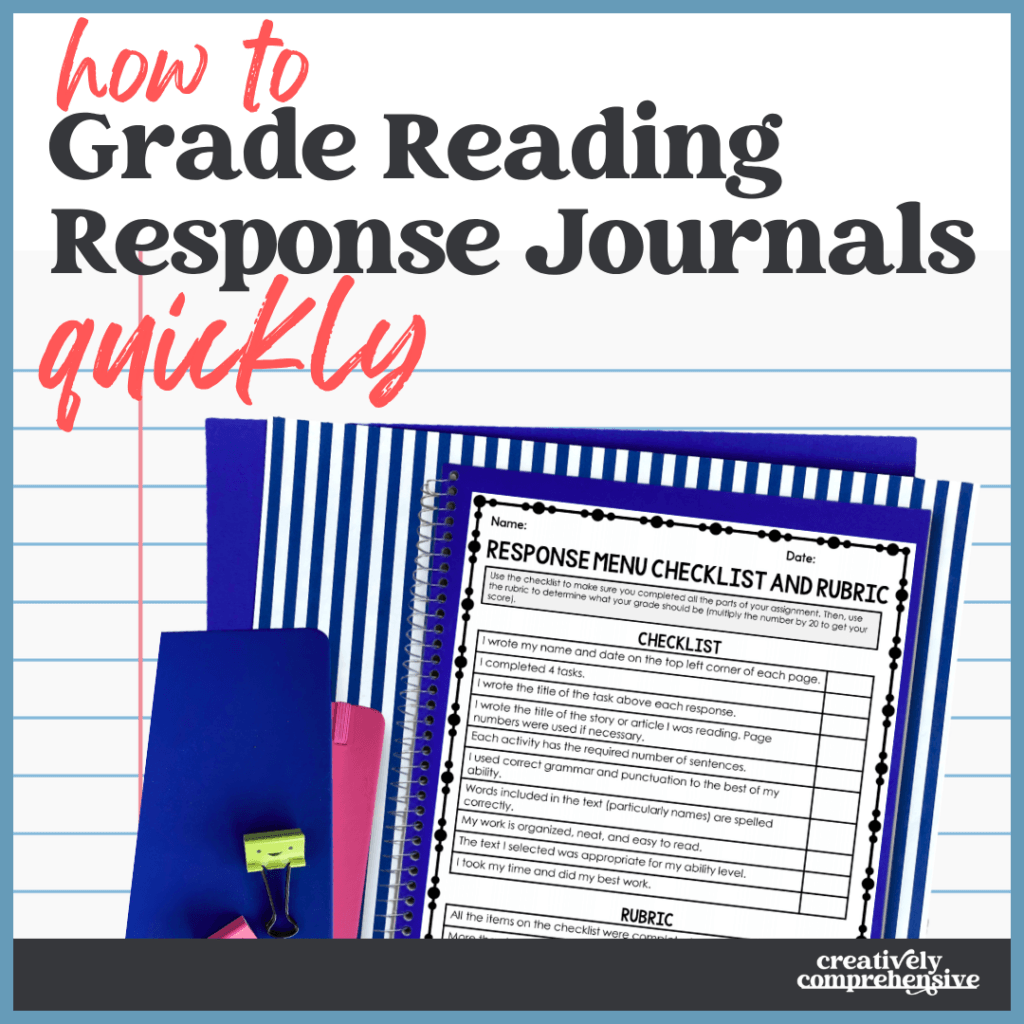
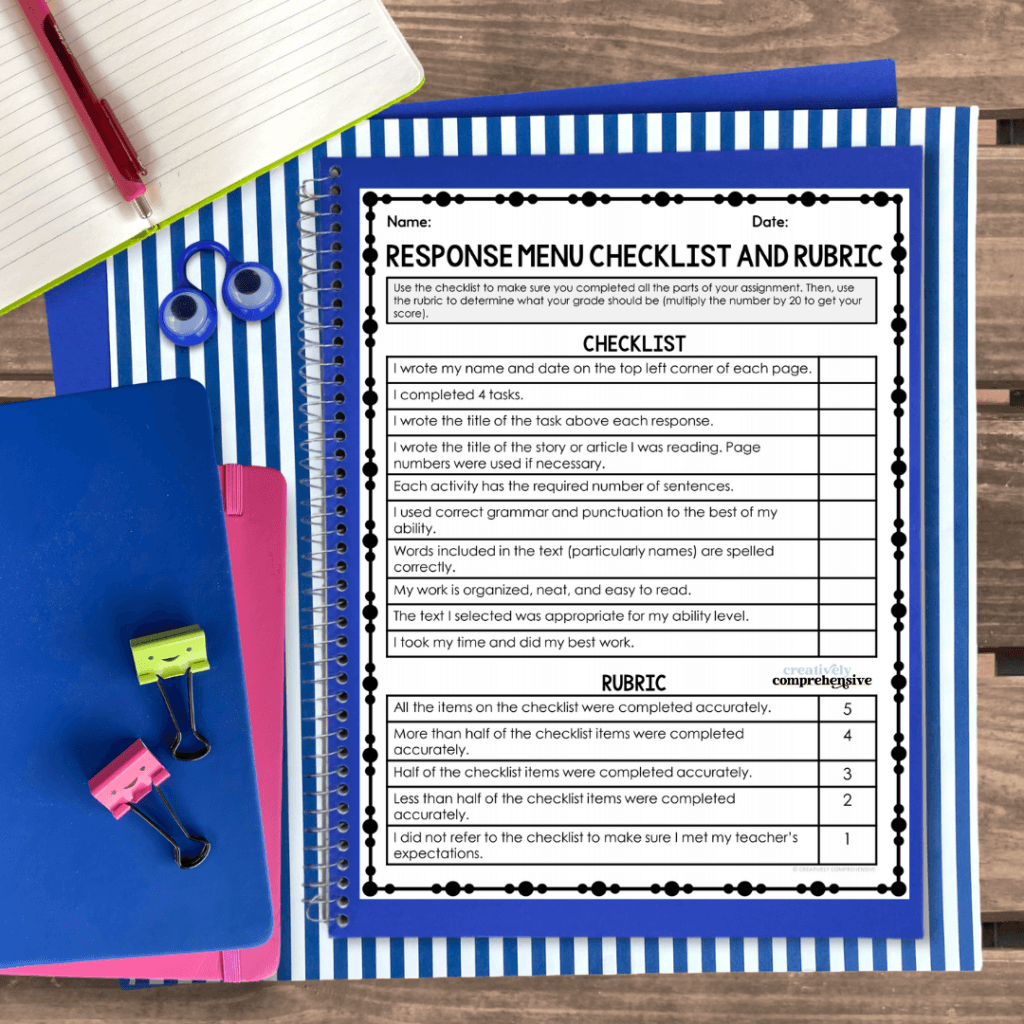
Before students did any reading response work on their own in my classroom, they were trained on a checklist and rubric. This way, my expectations were clear, and there were no surprises about what grade they received. You just have to make a little shift from thinking of a rubric as a teacher tool to thinking of it as a student self-assessment tool.
In my Reading Response Choice Board resource on TPT, students have response options, examples, graphic organizers, checklists, and rubrics to guide their work before it ever reaches the teacher. It’s the same system I used in my own classroom, and it saved me countless hours of weeding through work that wasn’t done correctly.
How Can Students Effectively Grade Their Own Reading Responses?
Students can learn how to grade their own reading responses by using a checklist and a rubric before turning in their work. This does not mean they assign the final grade. It means they check for completion, quality, evidence, and clarity before the teacher ever sees it.
Here are some sample questions they can ask themselves:
| Student Self-Check | Yes/Not Yet |
|---|---|
| Did I complete the response task I chose? | |
| Did I answer the whole prompt? | |
| Did I include text evidence or book details? | |
| Did I explain my thinking, not just summarize? | |
| Did I use the rubric/checklist before turning it in? |
At first, students will rush this.
They will check every box even when their name is missing. They will swear they included text evidence because they wrote “on page 12” somewhere in the margin.
That is normal.
Model it. Practice it. Show examples. Use non-examples. Do the checklist together until students understand that self-checking is part of the assignment, not something extra.
How Do Rubrics Make Reading Response Easier to Grade?
Rubrics make reading responses easier to grade because they set the same expectations for students and teachers. Instead of writing long comments on every response, you can quickly identify whether the student needs support with evidence, explanation, completion, or comprehension.
The key is to use the rubric before submitting the work.
Students should look at the rubric and ask, “Did I actually do this?” before handing it to you.
That one habit saves you from reading responses that may have a lot of words but not a lot of thinking.
Replacing Notebook Piles with Spot Checks
Spot checks let you review student work without collecting every notebook. Instead of grading thirty full notebooks, choose a small group of students or one response skill to check.
Try this:
- Check 5–7 students per day.
- Look at one response, not the whole notebook.
- Use a simple check/check-plus system.
- Leave feedback only when it will change the next response.
Spot checks work because students know their work can be reviewed at any time. You still get accountability, but you are not buried under notebooks.
How Do Reading Conferences Reduce Grading?
Reading conferences reduce grading because they give you immediate insight into student comprehension. A two-minute conversation can often tell you more than a full page of written response.
Ask:
- What are you reading?
- What did you write about today?
- Why did you choose that response?
- What evidence helped you?
- What would you improve before turning it in?
Sometimes the writing is weak, but the thinking is strong. Sometimes the response looks polished, but the student cannot explain the book. You can gauge this really quickly in a 2-minute conference at the beginning of your small group.
What Is a Manageable Weekly Grading Routine?
A manageable reading response grading routine might look like this:
Monday–Thursday:
Students read and complete responses using a choice board.
Friday morning:
Students check over work with the checklist and rubric.
Friday during your reading block:
Check over the rubrics, spot-check 5-7 journals, and converse with 5-7 students about their work.
You’re helping them learn accountability, learning how their reading strategies are evolving, AND saving yourself from hours of grading each week.
Why Choice Boards Make Grading Easier
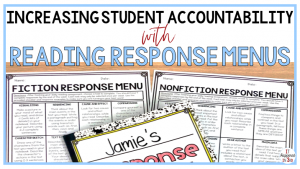
Reading response choice boards make grading easier because students can respond to different books and prompts while still using the same expectations. My best-selling TPT resource includes fiction and nonfiction menus, response sheets, examples, scaffolds, graphic organizers, checklists, rubrics, printable pages, editable templates, and digital options.
Students have support before they ask you for help. You don’t have to create things from scratch, or think of new homework activities each week.
Frequently Asked Questions
The number depends on your instructional goals, but most teachers find that one to three quality reading responses per week provides enough accountability without overwhelming students. Fewer, more thoughtful responses are often more effective than daily assignments that become repetitive.
A combination of both works best. Students should first demonstrate that they completed the task, but responses should also show evidence of thinking, comprehension, and engagement with the text. Using a checklist and rubric helps students understand the difference between simply finishing an assignment and producing quality work.
The fastest approach is to have students use a rubric and checklist before turning in their work. Teachers can then use spot checks, peer review, and reading conferences to assess understanding rather than grading every response in detail.
Accountability works best when students know their reading and responses may be reviewed at any time. Self-assessment checklists, peer review, reading conferences, and occasional spot checks encourage students to stay engaged without requiring teachers to collect notebooks every week.
Yes. Reading responses are most effective when students can apply the same thinking skills to any text. Choice boards, open-ended prompts, and flexible response activities allow students to respond to independent reading books, literature circle novels, and whole-class texts using the same expectations.
Final Thoughts
You do not need to take home thirty notebooks to grade reading response well.
Teach students to use the checklist. Teach them how to read the rubric. Let them revise before turning in the work. Use peer review, spot checks, and conferences to keep the system honest.
Reading response is here to help students become better readers, not steal your weekend.
Get a Head Start on Reading Response Journals
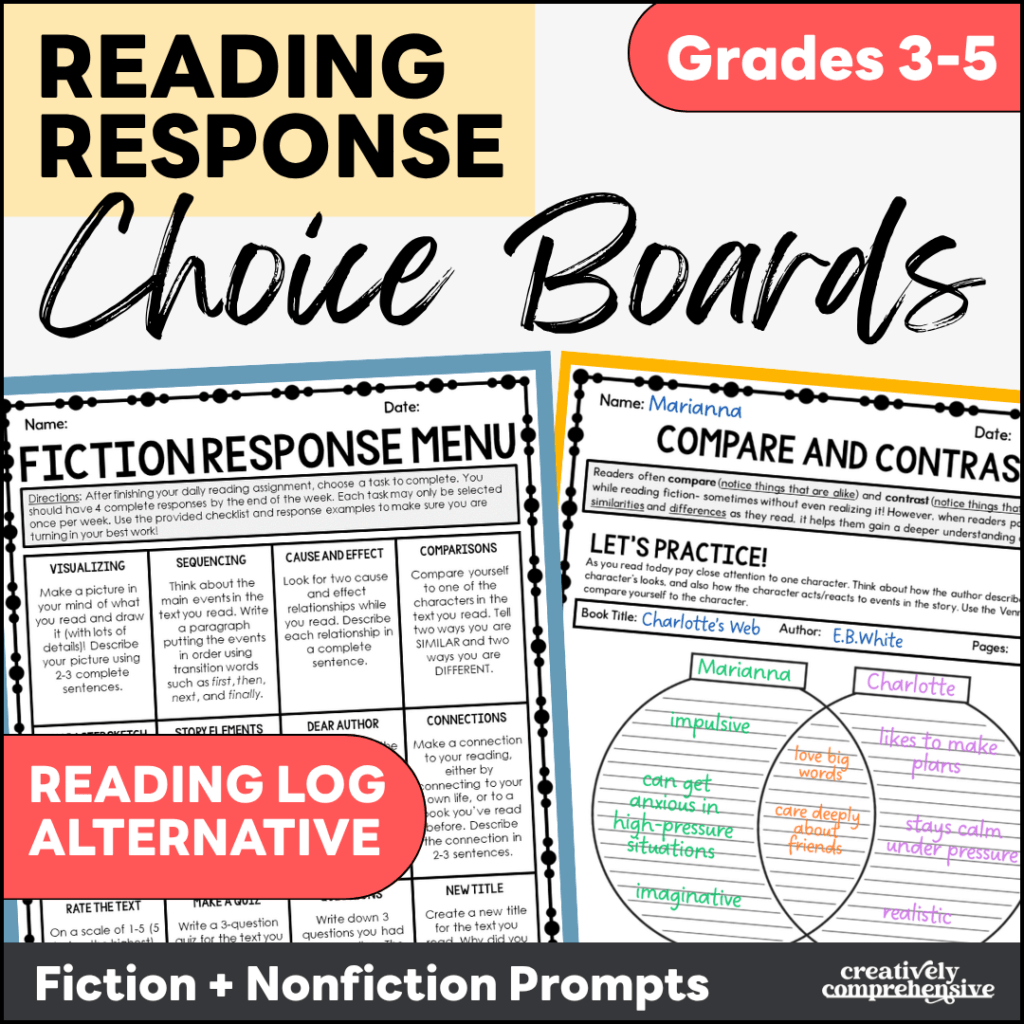
When I couldn’t find a reading response system I liked, I spent over a month creating fiction and nonfiction response menus, directions, examples, checklists, and more. Then I thought, “What if other teachers could benefit from this?” and my very first TPT resource was born. It’s received two major overhauls and now includes editable and digital options so that you can format everything exactly how you’d like it!
You can head to TPT to see more images and details about this resource.