by: Marianna Monheim Updated April 13, 2026
A meaningful Memorial Day activity for upper elementary students should help them understand the purpose of the holiday while still practicing real academic skills. A short reading passage paired with vocabulary and a written response works especially well because it keeps the lesson respectful, educational, and easy to manage during a busy end-of-year schedule.
Here’s a cleaner version that sounds more like you:
By the time Memorial Day rolls around, classroom energy is… not exactly calm.
Testing is over. Kids are antsy. Teachers are balancing field days, assemblies, and the general end-of-year scramble.
So yes, it can be easy to reach for something quick and check it off the list.
But Memorial Day is not just another holiday theme to stick on the calendar.
It gives students a chance to pause and reflect on something beyond themselves. Upper elementary students can handle that. They just need it framed in a way that is clear, age-appropriate, and meaningful.
Table of Contents
The 411 for Busy Teachers:
- Memorial Day lessons should focus on meaning, not just themed fun
- Reading + vocabulary + writing creates a complete, respectful lesson
- Upper elementary students benefit from short informational texts
- No-prep activities are ideal for late May classroom schedules
- A single connected worksheet set saves time and improves engagement
What Should Students Learn About Memorial Day?
At a basic level, students should walk away understanding this:
Memorial Day honors service members who died while serving in the U.S. military.
That’s it. Simple, clear, and age-appropriate.
But, we have opportunities here for students to learn more.
Students can discover:
- How the holiday began (Decoration Day)
- Why people visit cemeteries or hold ceremonies
- The difference between Memorial Day and Veterans Day
- What remembrance and respect actually look like
A reading passage helps here because it does some of the heavy lifting for you. It introduces the topic in a clear, organized way, so you are not trying to build the whole conversation from scratch.
Why Reading and Writing Activities Work So Well for Memorial Day
As a classroom teacher, the lessons I pulled for over and over again were often the simplest. Students read…and then did something with their new knowledge.
And although I love a good craft (even in upper elementary), bare bones, literacy-based lessons were the ones I found most effective.
Here’s why it works especially well for Memorial Day:
- Reading builds understanding
Students need context before anything else. A short passage gives them that. - Vocabulary reinforces meaning
Words like honor, sacrifice, remembrance actually stick when they’re tied to a text. - Writing encourages reflection
Even a few sentences can show whether students truly “get it.” - It’s easy to manage
Especially in May. No prep, no chaos, no cleanup.
This combination—read, think, respond—is exactly what keeps the lesson grounded while still being doable.
A Simple No-Prep Memorial Day Lesson (That Actually Works)
Let me give you something practical.
If you’re short on time (and let’s be honest, you probably are), a single, connected activity works better than piecing together multiple worksheets.
Here’s what that looks like:
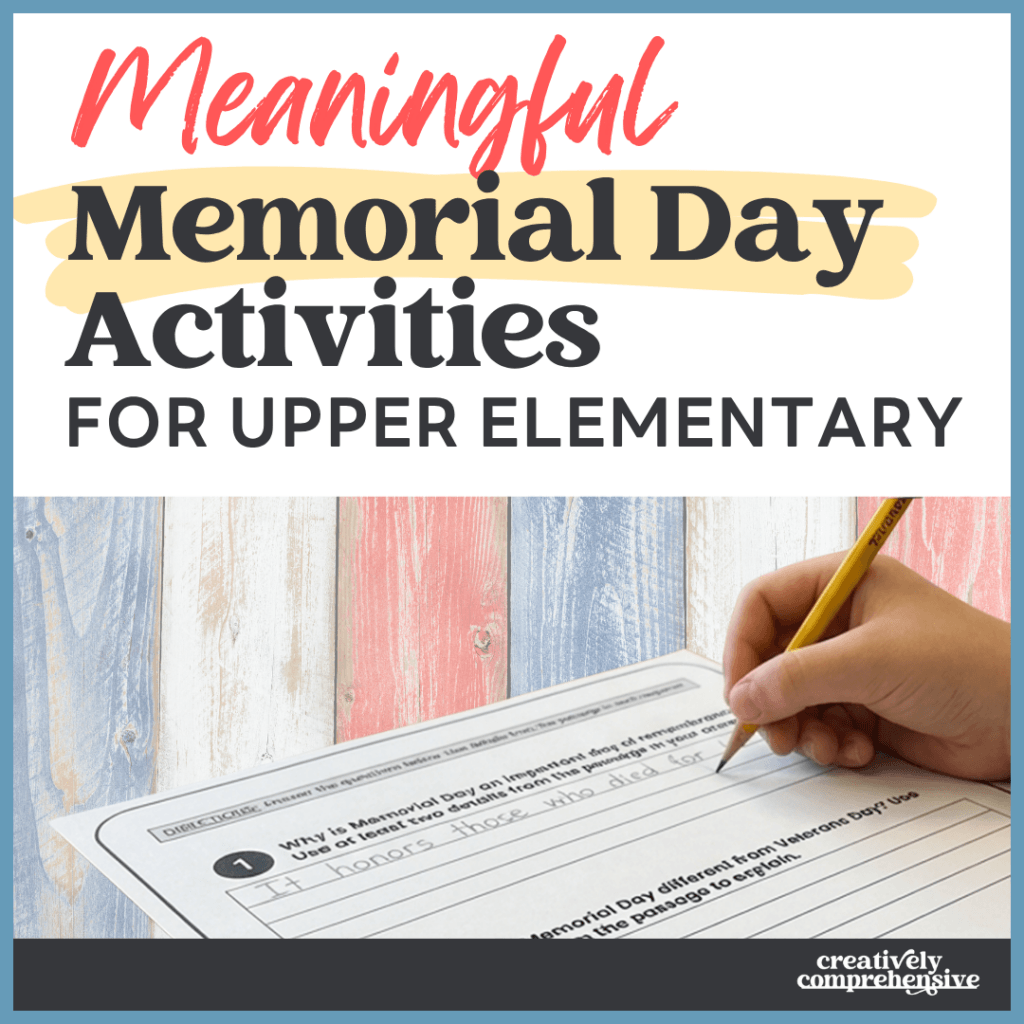
- A short Memorial Day reading passage
- A vocabulary-based word search using terms from the text
- Three written-response questions tied directly to the reading
That structure matters.
Because now students aren’t just doing a random puzzle—they’re:
- reading for understanding
- recognizing key terms
- and responding to what they learned
If you need a quick, respectful lesson like this, you can check out the print-and-go Memorial Day reading, word search, and writing activity here: Memorial Day Activities for Upper Elementary
People Also Ask...
A meaningful Memorial Day activity helps students understand the purpose of the holiday while still practicing academic skills. Reading passages, vocabulary activities, and short written reflections are effective because they combine learning with respectful engagement.
A meaningful Memorial Day activity helps students understand the purpose of the holiday while still practicing academic skills. Reading passages, vocabulary activities, and short written reflections are effective because they combine learning with respectful engagement.
Start with a simple explanation of the holiday, then use an informational reading passage and guided questions. Focus on remembrance and understanding rather than purely decorative or entertainment-based activities.
No-prep Memorial Day activities include reading comprehension passages, vocabulary worksheets, writing prompts, and short discussion questions. These are easy to manage and still support learning during a busy end-of-year schedule.
A reading passage provides students with the background knowledge needed to understand the holiday. It also allows teachers to integrate comprehension, vocabulary, and writing into one structured lesson.
Yes—when they are tied to a reading or vocabulary lesson. A word search becomes meaningful when it reinforces key terms students learned from the text.
How to Teach Memorial Day Respectfully (So the Lesson Sticks)
This is where a lot of teachers hesitate.
You want students engaged… but not at the expense of the meaning.
Here’s what I’ve found works:
- Keep explanations simple and direct
No need to overcomplicate it. - Let the reading do the heavy lifting
A well-written passage keeps things accurate and consistent. - Ask thoughtful, short questions
Not busywork—real prompts like “Why is Memorial Day important?” - Avoid turning it into just a “fun activity”
Kids can tell when something is filler. - Give space for reflection
Even 2–3 sentences can be powerful.
Are upper elementary students ready for hard conversations? Yes, to a point. I try to always lead from the understanding that they are still very much kids, and try to make things feel intentional without getting too heavy.
Your Memorial Day Lesson at a Glance
- Grades: 3-5
- Activities: Reading passage, word search, reflection questions
- When to Use: Whole class lesson, small group lesson, reading centers, sub plans
- Time: Approx. 30-45 minutes (can split into multiple days)
Frequently Asked Questions About Frayer Models
Grades 3–5 are ideal because students can read short informational texts and respond in writing with basic comprehension.
It fits both, but it’s especially effective in ELA because it integrates reading and writing skills naturally.
That it honors people who died while serving in the military and is a day of remembrance and respect.
More Posts from Creatively Comprehensive