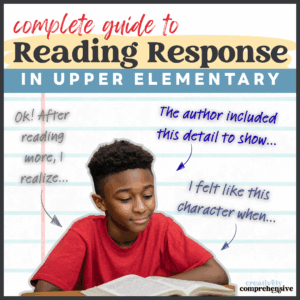
For most upper elementary classrooms, reading response activities are more effective than traditional reading logs. Reading response activities encourage deeper thinking, comprehension, and meaningful engagement with books, while reading logs primarily track reading volume. Reading responses help students analyze characters, make connections, infer meaning, and reflect on what they read.
That doesn’t mean reading logs have no value. The most effective literacy programs often use both: reading logs to monitor reading habits and reading responses to assess comprehension and critical thinking.
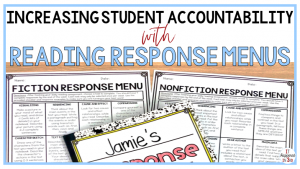
In need of Reading Response Menus? You can set up and implement these in no time.
Quick Takeaways
- Reading logs track how much students read.
- Reading responses reveal how well students understand what they read.
- Reading responses promote higher-order thinking skills.
- Reading logs are easier to manage but provide limited insight into comprehension.
- A combination of both often works best in upper elementary classrooms.
What Is a Reading Log?
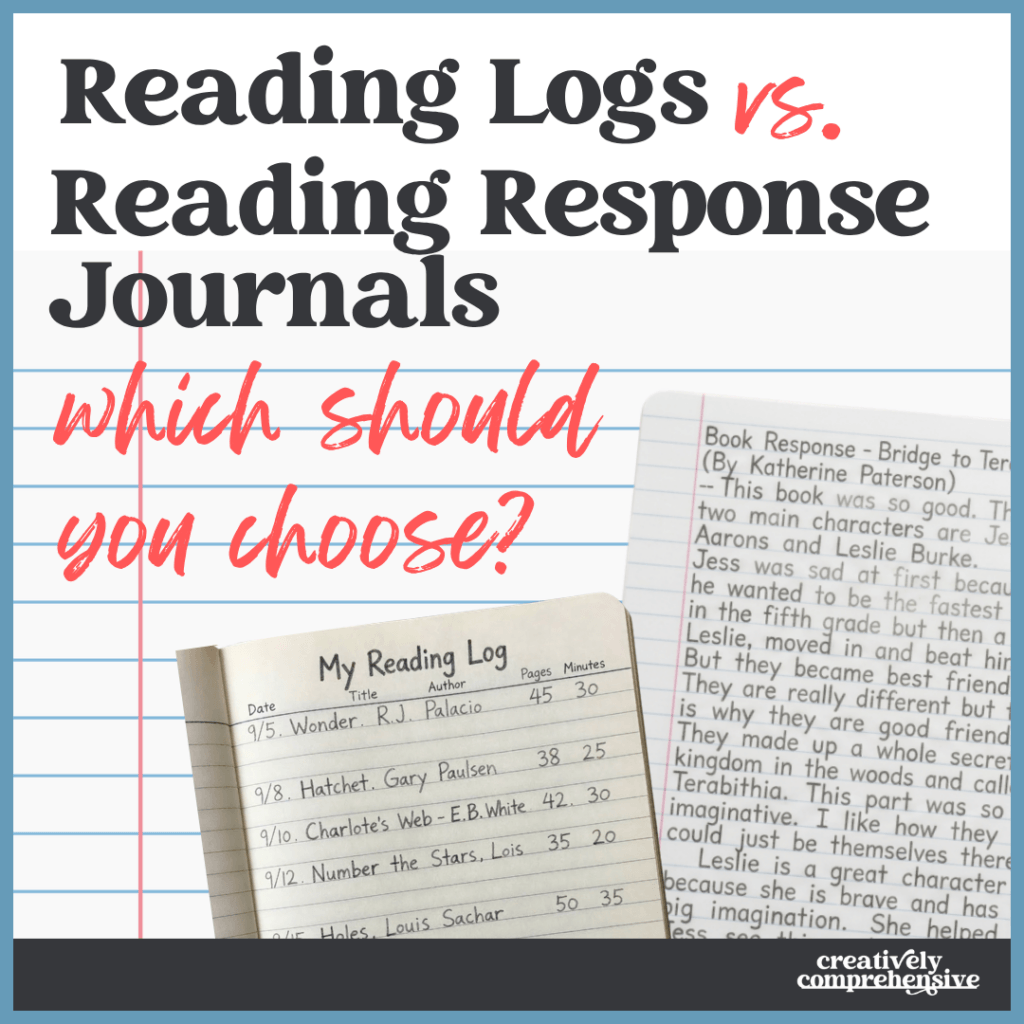
A reading log is a tool students use to record their independent reading. Typically, students track:
- Book title
- Author
- Pages read
- Reading minutes
- Date completed
The goal is accountability and building consistent reading habits.
For years, reading logs were considered a staple of elementary literacy instruction. Teachers and parents appreciated having a simple way to monitor independent reading outside the classroom.
However, many educators have noticed a common problem: students can complete a reading log without truly engaging with the text.
A child may faithfully record 30 minutes of reading every night but still struggle to discuss the story, explain character motivations, or identify the author’s message.
A reading response asks students to think about and react to what they read.
Instead of simply recording pages, students answer questions, complete prompts, or create written reflections about a text.
Common reading response activities include:
- Character analysis
- Making text-to-self connections
- Predicting outcomes
- Identifying themes
- Summarizing chapters
- Analyzing conflicts
- Evaluating author choices
- Supporting opinions with evidence
Reading responses transform reading from a passive activity into an active thinking process.
Reading Response vs. Reading Log: What's the Difference?
| Feature | Reading Log | Reading Response |
|---|---|---|
| Primary Purpose | Track reading volume | Assess comprehension |
| Student Thinking Level | Low | Moderate to High |
| Focus | Quantity of reading | Quality of thinking |
| Easy to Grade | Yes | Sometimes |
| Reveals Understanding | Limited | Strong |
| Supports Critical Thinking | Minimal | High |
| Encourages Reflection | Rarely | Frequently |
The key difference is simple:
Reading logs measure reading behavior. Reading responses measure reading thinking.
Why Many Upper Elementary Teachers Are Moving Away from Traditional Reading Logs
Raise your hand if you have students who quickly learn how to complete a reading log without actually engaging with a book.
I noticed this in my 4th-grade classroom when I started at a new school. Every student reported reading exactly 20 minutes each night. The numbers looked perfect on paper. Yet when I asked students about the story, no one had anything meaningful to say.
The problem wasn’t the students.
The problem was that the assignment rewarded tracking time rather than demonstrating understanding.
Research and classroom experience increasingly suggest that comprehension-focused activities create stronger readers than accountability-focused activities alone.
When students know they’ll be asked to think about a character’s choices, identify evidence, or make a connection, they’ll read more intentionally.
Why Reading Response Supports Deeper Literacy Growth
It Encourages Active Reading
Students read differently when they know they’ll respond to a text.
Instead of moving quickly through pages, they pay attention to:
- Character development
- Plot changes
- Important details
- Vocabulary
- Themes
This active engagement strengthens comprehension.
It Builds Critical Thinking Skills
Upper elementary students are transitioning from learning to read toward reading to learn.
Reading responses help students:
- Infer meaning
- Analyze evidence
- Draw conclusions
- Evaluate ideas
These are the same skills required for success in middle school and beyond.
It Provides Better Assessment Data
A reading log tells a teacher how long a student has read.
A reading response reveals:
- What the student understood
- Where misconceptions exist
- How deeply the student is thinking
That information is far more useful for instructional planning.
Are Reading Logs Still Useful?
Absolutely.
Reading logs can support important literacy goals when used appropriately.
They are especially helpful for:
- Building reading stamina
- Tracking reading habits
- Setting reading goals
- Encouraging consistency
- Monitoring independent reading
The mistake many schools make is treating reading logs as evidence of comprehension.
They aren’t designed for that purpose.
Think of a reading log like a fitness tracker. It can tell you how many steps someone took, but it can’t tell you how healthy they are overall.
Similarly, a reading log tracks reading activity but not reading understanding.
The Best Approach: Combine Reading Logs and Reading Responses
Most literacy experts would argue that this isn’t really an either-or decision.
The strongest independent reading programs often include both.
Example Literacy Framework
Reading Log
- Track daily reading habits
- Record books completed
- Set reading goals
Reading Response
- Complete one meaningful response each week
- Reflect on important reading moments
- Analyze characters and themes
- Support ideas with textual evidence
This balanced approach gives teachers visibility into both reading volume and reading comprehension.
Frequently Asked Questions
Not necessarily. Reading logs still help build accountability and reading habits. However, many educators now supplement them with reading responses because logs alone provide limited information about comprehension.
Yes. Reading responses require students to interact with the text through analysis, reflection, and evidence-based thinking. This deeper engagement often leads to stronger comprehension.
For measuring literacy growth, reading responses are generally more effective. They provide insight into comprehension, critical thinking, and student engagement with text.
Many teachers find success with one high-quality reading response per week rather than daily written assignments. This keeps students engaged without overwhelming them.
Absolutely. Reading logs help track reading habits, while reading responses assess understanding. Together, they provide a more complete picture of student reading development.
Final Thoughts
If the goal is simply to know whether students are reading, a reading log can do the job.
If the goal is to develop thoughtful, analytical readers who engage deeply with books, reading responses are usually the stronger instructional tool.
The most effective upper elementary literacy classrooms recognize that reading volume matters—but reading thinking matters even more.
When students are given opportunities to reflect, question, analyze, and connect with what they read, they move beyond completing assignments and begin developing lifelong literacy skills.
Over time, those journal entries become one of the most valuable windows into your students’ reading lives.
Get a Head Start on Reading Response Journals
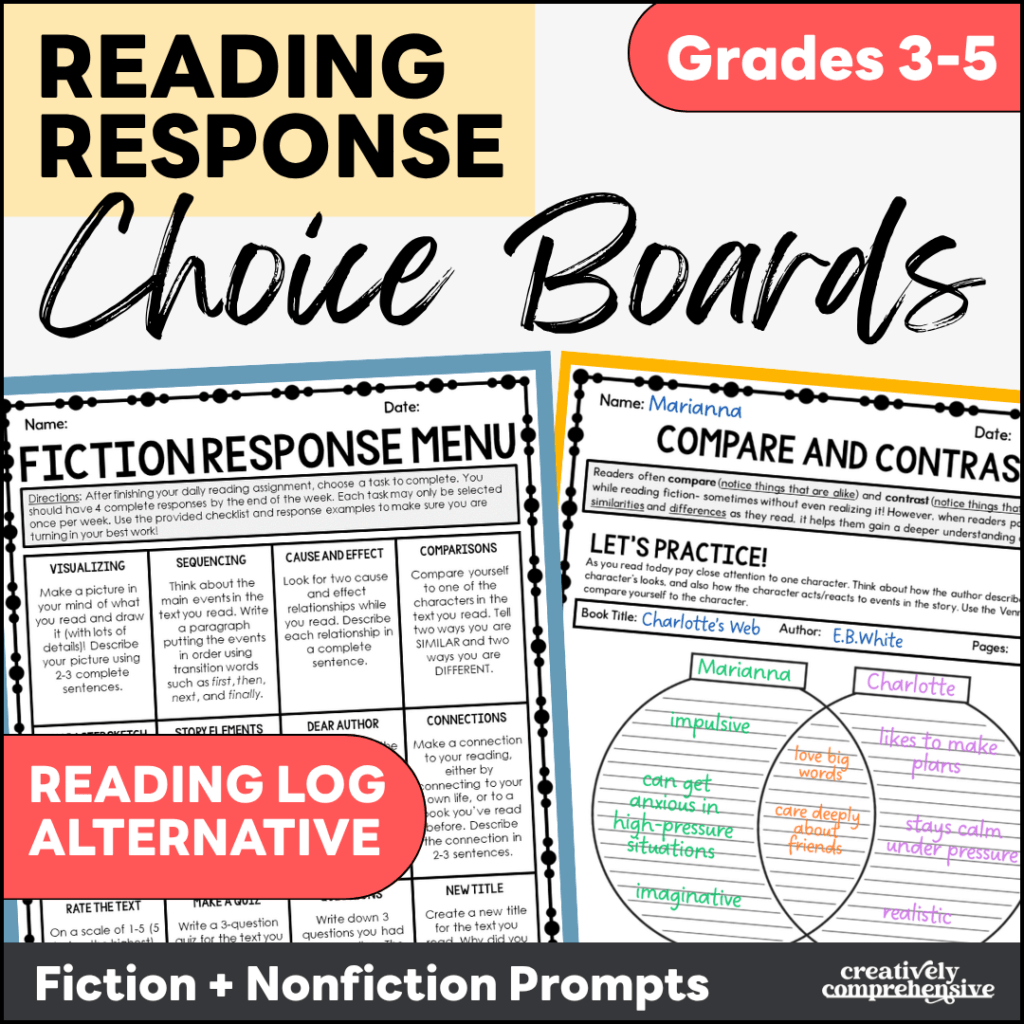
When I couldn’t find a reading response system I liked, I spent over a month creating fiction and nonfiction response menus, directions, examples, checklists, and more. Then I thought, “What if other teachers could benefit from this?” and my very first TPT resource was born. It’s received two major overhauls and now includes editable and digital options so that you can format everything exactly how you’d like it!
You can head to TPT to see more images and details about this resource.