by: Marianna Monheim
Updated: 7/20/2025
The first week of school sets the tone for the entire year. Yet many classrooms start off with a heavy dose of rules, procedures, and teacher talk.
And let’s be real: it’s tempting. You’ve got new faces, new routines, a fresh set of Expo markers—and exactly zero idea how this group will behave when left alone with a pencil sharpener.
But I’m here with a gentle reminder:
If you want an engaged classroom, you have to start with active learning from Day 1.
Not once the schedule settles down. Not after the rules slide deck. Day. One.
In this post, I’ll share how to structure your first week of school routines to build a classroom that’s student-centered, responsive, and values thinking over rote activities.
Table of Contents
The Problem with Traditional Back-to-School Routines
Many well-meaning teachers spend the first days walking through expectations slide-by-slide, hoping it will prevent misbehavior later.
But what students actually learn is that school is something they sit through, not engage in. You become the voice at the front of the room, and they become seat-fillers.
The first week of school shouldn’t be a lecture. It should serve as a model for how learning will feel throughout the year.
Make it clear to students: school is something they engage in, not something to sit through.
Why Active Learning Matters in Week 1
Active participation isn’t just for content lessons. When students make decisions, move around, and reflect—even during routines or icebreakers—they:
Buy into classroom norms faster
Feel a sense of ownership over their role in the room
Remember what they practiced (not just what they were told)
It’s not magic. But it is the difference between having students who show up… and students who tune out.
This all-hands-on-deck approach helps prevent “seat-filler syndrome” before it starts.
How to Structure Your First Week to Introduce Student Ownership
1. Treat Routines Like Academic Content
Don’t just explain your classroom rules: teach them through demonstration, guided practice, and student input.
Use techniques like:
Modeling what a routine looks/sounds like (yes, even walking to the carpet)
Having students reflect on why it matters
Practicing in small groups and reviewing what went well
Will upper elementary students push back a bit? They might. Frame these activities as “making sure you see how I might be different than past teachers” more so than “I don’t think you’ll make smart choices on your own,” and buy-in should improve.
2. Use Purposeful Movement Activities
Movement doesn’t mean chaos. It means engagement. I’ve always found it strange that we know it’s a universal truth that children need to move, yet we want them to sit at their desks all day. Let’s lean into their natural behaviors instead of fighting them!
For your back to school plans, you can start with low-stakes activities that:
Get students talking to one another
Reinforce a classroom norm or expectation
Provide a structured way to explore the space or materials
Examples:
Scavenger hunts tied to rules or supplies
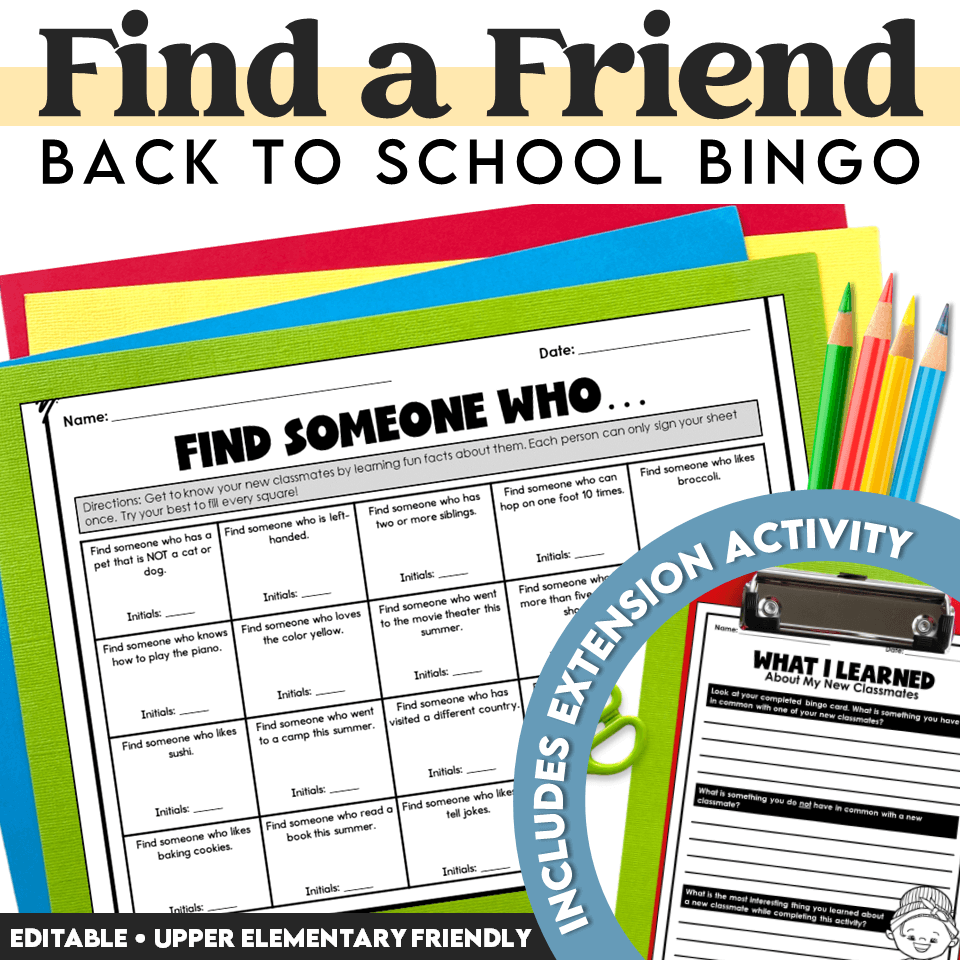
Find-a-Friend Bingo with a reflective share-out
- Sketches of good and poor behavior choices at centers
3. Center Student Voice from the Start
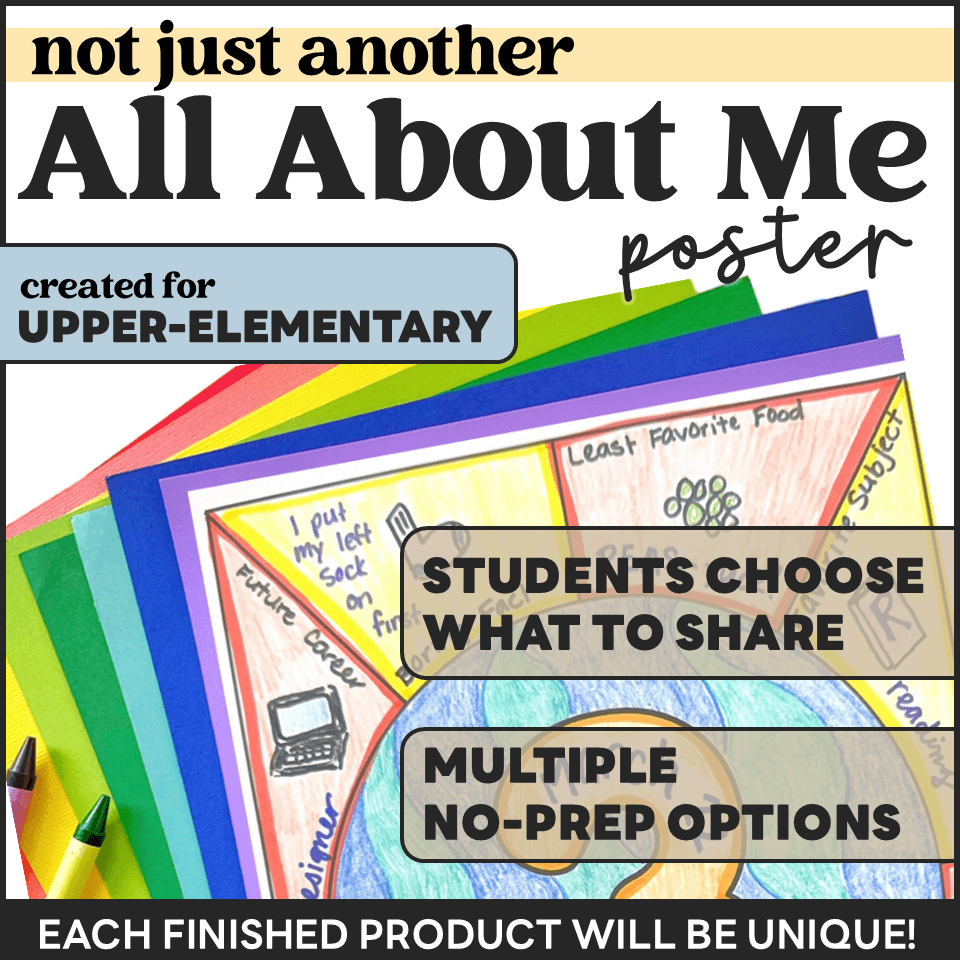
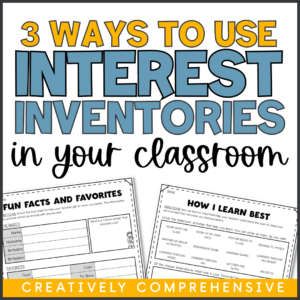
Instead of filling out “favorites” worksheets, give students choice in how they share about themselves.
Look for prompts that:
Invite stories, not just facts
Allow choice in format (writing, drawing, sharing aloud)
Connect personal info to classroom culture
This is inherently more engaging than filling out their favorite color and food five years in a row, and it also shows students that their voice and contributions are part of the learning environment. Win/win!
Day 1 Sample Flow
Here’s what a Day 1 focused on active participation might include:
MORNING WORK
MIDDAY
AFTER LUNCH
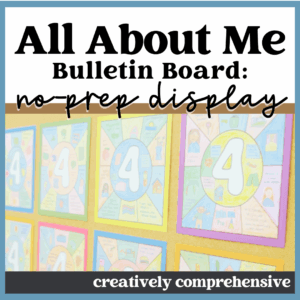
Arrival activity: All About Me poster with thoughtful, student-selected prompts
Midday: Back to School Choice Board with tasks tied to routines and norms
Afternoon: Find a Friend Bingo + reflection questions or class debrief
Remember: engagement isn’t about wearing an inflatable T-rex costume (but if that’s your thing, don’t let me stop you!)…it’s about making sure everyone is involved in the task. No turns, no outs.
Done for You Support
You don’t have to reinvent the wheel to use these ideas in your own classroom. Here are 3 ready-to-go resources that align with this approach:
Find them all in my TPT store!
Frequently Asked Questions
Start small. Even 10–15 minutes of student choice or reflection helps establish your classroom culture. Many of the suggested activities double as procedure practice, so you’re being extra intentional about what’s already required.
Absolutely! Not to mention, you’re giving off the vibe that your room is a low-stakes environment to share and participate. To be even more sensitive, consider activities where students only share with a partner rather than the whole class.
Make your expectations crystal clear and tie each activity to a real purpose. For example, use Find a Friend to practice speaking and listening skills, or treat a choice board task as part of your writing routine. What you’re saying without saying: these are not options, they’re assignments.